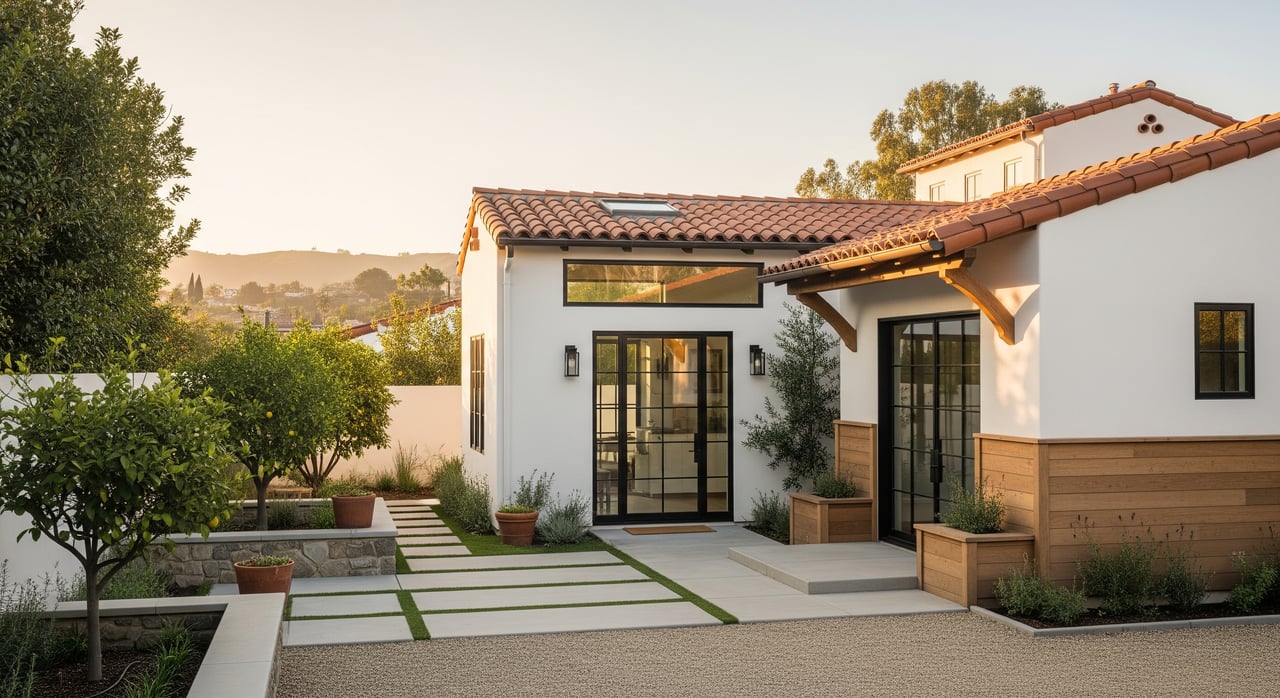
Thinking about adding an accessory dwelling unit to your San Juan Capistrano property? You are not alone. ADUs are a practical way to create rental income, house family, or boost resale flexibility in a high-demand Orange County market. In this guide, you will learn the rules that matter, what projects typically cost, and how to think about rentability and ROI so you can move forward with clarity. Let’s dive in.
ADU basics in California
State law makes ADUs broadly permissible across California and requires cities to use a ministerial review process for applications that meet objective standards. That means your plans are reviewed for code compliance rather than subjective design opinions, and agencies must act within defined timelines once your application is complete.
Size and configuration options depend on your lot and local code. Guidance materials often reference detached ADUs up to 1,200 square feet, attached ADUs, garage or interior conversions, and junior ADUs. Your final allowed size will depend on setbacks, lot coverage, and other site rules in San Juan Capistrano.
Parking and impact fees are limited under state law in many situations. For smaller ADUs, especially those 750 square feet or under, certain impact fees are restricted. Parking requirements are also reduced or waived in several common scenarios, such as proximity to public transit. Always confirm how these rules apply to your property with city staff.
Owner-occupancy rules for ADUs have been relaxed at the state level in recent years. Short-term rental regulations are set locally, so you should verify whether short-term rentals are allowed in the city and what registration rules apply.
If your home is in a common-interest community, homeowner associations have limited ability to prohibit ADUs. Design guidelines may still apply, and they must comply with state law, so review your CC&Rs and talk with the board early.
SJC permitting checklist
Start with the City of San Juan Capistrano Planning Division and Building & Safety. Ask for an ADU pre-application meeting and the latest checklist. This helps you confirm objective standards, submittal items, and department contacts before you spend on plans.
Key items to verify with the city:
- Allowed ADU types on your lot, such as attached, detached, conversion, and junior ADUs.
- Setbacks, height limits, and lot coverage or floor area ratio caps that define buildable area.
- Historic or mission-area overlays that can add design review steps.
- Whether your property sits in any coastal zone overlay that could trigger additional review.
- Local short-term rental rules if you plan to rent the ADU by the night or week.
- Parking standards that may still apply, depending on location and site context.
- Fees you should budget, including plan check, building permits, and utility connection or capacity charges.
Plan for a ministerial process that can still take weeks to months. Your application may need sign-off from planning, building, utilities, and sometimes public works. If you are near a historic resource or in a coastal overlay, expect added time and more detailed submittals.
Coordinate early with utilities. Southern California Edison, SoCalGas, and your water and sewer providers can advise on meter needs and connection fees. If your property uses septic, check with the local health agency about system capacity and any upgrade requirements.
Costs in Orange County
Budgets vary widely based on design, site conditions, and labor and material markets. In Orange County, projects often trend toward the upper end of typical ranges. Use these broad industry estimates to frame early conversations. Always obtain multiple local bids.
- Garage conversion: roughly $30,000 to $150,000 or more, depending on plumbing, electrical, insulation, windows, and finishes.
- Interior conversion: roughly $50,000 to $200,000 or more, depending on scope.
- Attached ADU (new construction): roughly $100,000 to $400,000 or more based on size and finish quality.
- Detached ADU (new construction): roughly $150,000 to $500,000 or more, with larger or higher-end units exceeding that.
- Prefab or modular ADU: can land in the lower to mid-range, but you still pay for foundation, utility work, transport, craning, and permitting.
Cost drivers to watch:
- Site work such as grading, retaining walls, or demolition.
- Utility connections, sewer capacity charges, and meter upgrades.
- Foundation type and soil conditions.
- Access to the site on narrow or sloped lots.
- Historic or coastal design requirements that add design time and materials.
- Soft costs, including architectural and engineering, plan check, permit, and any environmental reports.
- Financing and carrying costs if construction runs long.
Financing options
Many owners use equity to fund ADUs, but you have several paths. Fit the option to your budget, timeline, and long-term plans.
- Cash or savings for the simplest process.
- Home equity line of credit or home equity loan.
- Construction loan or ADU-specific construction financing.
- Cash-out refinance.
- Renovation programs such as FHA Title I or 203(k), if suitable for your mortgage and lender.
- Private ADU lenders or local banks that understand ADU timelines and draws.
Keep your lender looped in early. Ask about draw schedules, interest during construction, and how the finished ADU will affect your mortgage profile.
Site and utility realities
San Juan Capistrano has a mix of lot sizes, slopes, and older utility infrastructure in some areas. Early due diligence can prevent costly surprises.
Common physical constraints:
- Irregular or sloped lots that need grading or retaining walls.
- Easements and setbacks that reduce your buildable footprint.
- Historic overlays near Mission San Juan Capistrano that influence exterior design.
- Proximity to creeks or riparian areas that may trigger added review.
Utility considerations:
- Sewer vs. septic: confirm sewer connection capacity, fees, or septic feasibility and upgrades.
- Water meter capacity: some projects need a larger or additional meter or a capacity fee.
- Electrical service: many older homes need panel upgrades or a new meter to support modern loads.
- Stormwater: added hardscape can change runoff, which may require on-site mitigation.
Design and access:
- Fire separation, egress, and life-safety features per building code.
- Access paths, steps, and grade transitions that affect usability.
- Privacy and noise solutions, including window placement and landscaping.
Before you commit significant funds, consider these action items:
- Order a boundary survey and soils review if you plan grading or a new foundation.
- Request utility capacity letters for water, sewer, and electric.
- Ask the city for any easement or pipeline maps that affect your site.
- Get ballpark estimates from an architect and two or three local contractors with ADU experience.
Rentability and ROI
ADUs can provide steady rental demand in Orange County, but returns depend on your design, location, and costs. Use conservative numbers and include all expenses.
Revenue considerations:
- Base rent on comparable studios and one-bedroom units near your property. Proximity to services and employment centers can support stronger rent.
- Long-term leases often provide higher occupancy and lower operating costs than short-term rentals.
- If you are considering short-term rentals, confirm city rules and any registration requirements before relying on that income.
Expense items to include:
- Property tax increases tied to the added improvement value.
- Insurance premium changes.
- Maintenance, repairs, and a reserve for replacements.
- Utilities and whether the tenant or owner pays them.
- Property management fees if you hire a manager.
- Vacancy allowance to cover turnover periods.
Simple metrics to frame your analysis:
- Gross rental yield equals annual rent divided by total project cost, including soft costs. Express this as a percentage for a quick comparison.
- Cash-on-cash return equals annual pre-tax cash flow divided by your cash invested.
Beyond rent, ADUs can add non-financial value. You might use the unit for multigenerational living, a caregiver, or flexible office or guest space. For resale, an ADU can position your home as a two-unit property, which changes how buyers evaluate it and can improve marketability in some segments.
Common cautions:
- Permitting and construction delays can push back your income start date.
- Historic or coastal overlays can add cost and review steps.
- Short-term rental restrictions can limit nightly rental strategies.
- Be realistic with rent and occupancy assumptions, and include all soft costs.
Your next steps
Follow a clear sequence to reduce surprises and control costs.
- Contact the San Juan Capistrano Planning Division for a pre-application meeting, the current ADU checklist, and a fee estimate.
- Pull a preliminary title report and order a site survey to identify easements and boundaries.
- Coordinate with water, sewer, electric, and gas providers to confirm capacity, meters, and connection fees.
- Get rough pricing from multiple local contractors who have built ADUs in Orange County.
- Speak with a lender about financing options and timelines, and consult the Orange County Assessor or a tax advisor about property tax impacts.
- If you are in a historic or coastal area, verify design review and any additional approvals at the start.
Ready to talk through how an ADU could fit your goals and your property in San Juan Capistrano? Reach out to Tom Bertog for a local perspective and a practical plan.
FAQs
Can I build an ADU on my San Juan Capistrano lot?
- It depends on your zoning, lot coverage, setbacks, easements, and any historic or coastal overlays. Start with a city planning pre-application to confirm feasibility.
How long does ADU permitting take in SJC?
- Reviews are ministerial when you meet objective standards, but multi-department checks can still take weeks to months, especially if historic or coastal reviews are involved.
How much does an ADU cost in Orange County?
- Conversions can start around tens of thousands of dollars, while new detached builds often run into the mid to high hundreds of thousands. Get multiple local bids to refine your budget.
Will my property taxes increase after building an ADU?
- New construction typically triggers an assessment on the improvement value, which can raise your property taxes. Confirm timing and method with the Orange County Assessor.
Can my HOA stop me from adding an ADU?
- HOAs have limited ability to prohibit ADUs under state law, but design rules and approvals can apply. Review CC&Rs and coordinate with your HOA early.
Are short-term rentals allowed in San Juan Capistrano ADUs?
- Short-term rental rules are set locally and can change. Check the city’s current ordinance and any licensing requirements before planning for nightly rental income.
Do I need new parking for an ADU?
- Parking rules are limited by state law in many situations, but local standards can still apply. Ask city planning how parking requirements apply to your address.
