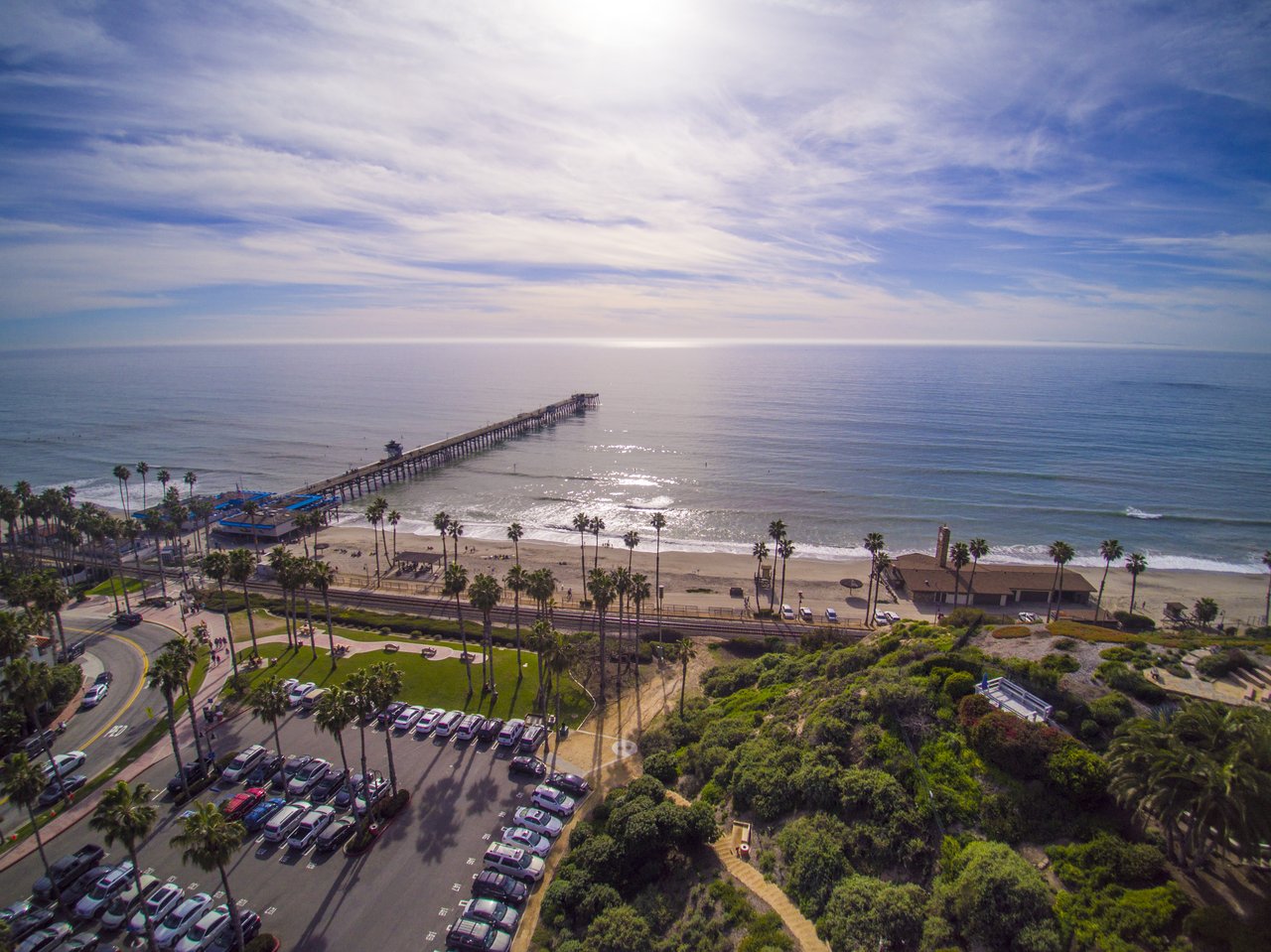
The San Clemente-specific details I want buyers to notice before the kitchen, staging and ocean view distract them
My First Rule: Start the Tour Before We Open the Front Door
I start evaluating a house while we are still standing in the street.
I want to know whether the street is quiet or used as a cut-through. I look at how tightly the neighboring homes sit, how much curb parking is available, whether the driveway is steep, what is directly across the street and what is behind the property.
Then I stop talking for a minute and listen.
Can you hear Interstate 5? Traffic on a busier road? A school? The train? Pool equipment? Dogs? Construction? None of those things automatically makes a home a bad choice. The question is whether they matter to you.
In San Clemente, I also pay attention to elevation. A home that looks close to downtown or the beach on a map may involve a meaningful hill. If walkability is one of the reasons you are paying a premium for the location, I want you to experience the route rather than assume the map tells the whole story.
Look at the Lot Before You Fall in Love With the House
Lot size is one of the most misleading numbers in a listing.
A 7,000-square-foot lot is not automatically better than a 5,000-square-foot lot. San Clemente has slopes, retaining walls, irregular parcels and homes positioned very differently on their sites. What matters is how much of the property is usable and whether that usable space fits the way you live.
Walk the entire outdoor area if possible. Where would you put a dining table? Is there a flat area for a dog, kids, a garden or entertaining? Are neighbors looking directly into the yard? Does a second-story home behind you change the privacy?
I also look for visible clues that deserve more investigation later: retaining walls, low areas, drainage channels, staining, patched hardscape or obvious evidence of water movement. I am not diagnosing a drainage problem during a showing. I am simply making a note so we know what to investigate if the home becomes a serious contender.
In San Clemente, Sun, Wind and Orientation Matter More Than Buyers Expect
This is one of those things listing photos rarely explain well.
The direction a home faces can change natural light, afternoon heat and how comfortable the outdoor areas feel. Elevation and exposure can change the wind. Coastal locations can feel cooler and more marine-influenced, while inland neighborhoods can be brighter and warmer on the same afternoon.
So I ask buyers a very practical question: Where are you actually going to spend your time?
If the answer is the backyard, let us stand there. If you are buying the home because of a deck, let us see how exposed it feels. If you want a bright kitchen, let us understand where the natural light is coming from.
You can change light fixtures. You cannot rotate the house on the lot.
Do the Sit-Down Test on an Ocean View
San Clemente has everything from small blue-water peeks to spectacular panoramic ocean views, and the words “ocean view” do not tell you which one you are getting.
If a view is part of the reason you are paying more for a property, I want you to evaluate it from the places where you will actually live.
Stand at the kitchen sink. Sit where the sofa would go. Sit at the dining table. Step into the backyard. Walk into the primary bedroom.
I call this the sit-down test because I have seen views that look impressive while you are standing at a window but largely disappear once you sit down.
Also look through the view, not just at the ocean. Are you looking over rooftops? Utility lines? Trees? A busy street? Is the view primarily from one upstairs room, or does it benefit the main living spaces?
No one should assume a private view will remain unchanged forever. If the view carries a meaningful premium, the surrounding conditions deserve property-specific investigation.
Listen With the Windows Open and Closed
Noise is extremely personal, and San Clemente is a place where it can change within a few streets.
A home near Interstate 5 may sound very different depending on elevation, wind and which side of the structure faces the freeway. Coastal properties near the rail corridor can have a different sound environment than homes several blocks inland.
During a serious tour, I like to listen from the backyard, the primary bedroom and the main living area. If possible, listen once with windows closed and once with them open.
If noise is a concern and the house remains a contender, come back to the street at another time of day. Five extra minutes can tell you more than another hour looking at listing photos.
Test the Floor Plan With Your Actual Life
Do not just count bedrooms and bathrooms.
Walk through the house the way you would live in it. Where do the groceries come in from the garage? Where will backpacks, shoes, surfboards, bikes or beach gear go? Is the laundry where you want it? If you work from home, is the office actually somewhere you can take a call?
Think about furniture. A large room can be surprisingly awkward if there is only one place for a sofa or television. A smaller room can work beautifully if the proportions are right.
I also look for square footage that a buyer may be paying for but rarely use. A formal room or oversized hallway adds to the total square footage, but it may not add much to your daily life.
I would rather see you buy 2,000 square feet that works than 2,300 square feet that does not.
Look Past the Remodel—and Ask What Was Actually Changed
Fresh paint, new flooring and a beautiful kitchen can make almost any home feel exciting.
But those are among the easiest parts of a property to change.
I am more interested in the things behind the remodel. Were walls removed? Was living space added? Was a garage converted? Was a deck expanded? Is there an ADU or room addition? Does the floor plan appear different from what you would expect for the age or tract?
That does not mean anything was done improperly. It means that if the alteration is important to the value or use of the home, permit records and documentation may deserve review during due diligence.
The City of San Clemente provides a public permit-search system, but permit history still has to be evaluated for the specific address and work involved.
A great remodel is a bonus. It should never stop us from evaluating the underlying property.
Older Coastal Homes Need a Different Set of Eyes
San Clemente has homes from many different eras, and I would never reject a house just because it is older. Some of the most interesting properties in town are older homes in locations that would be difficult to reproduce today.
But I tour them differently.
I may pay closer attention to visible electrical equipment, plumbing clues, windows, roof condition, drainage, foundations or slabs, exterior wood, balconies, railings and previous additions. Closer to the ocean, I also look carefully at exterior metals and finishes because moisture and salt exposure can be harder on materials.
Again, this is not a substitute for qualified inspections. I am simply trying to identify the questions we want professionals to answer if you move forward.
Do Not Skip the Garage, Driveway and Guest Parking
Parking is one of the least glamorous parts of a home tour and one of the things that can become most annoying after you move in.
Pull into the driveway mentally—or literally when appropriate. Is it unusually steep? Will two cars fit comfortably? Does one car have to move every time the other leaves?
Then look inside the garage. Older garages can be tighter than buyers expect, and built-in cabinets, water heaters or other equipment can reduce usable space.
If you are closer to downtown or the beach, street parking may matter much more. In an HOA community, guest and overnight parking rules may matter too.
If you own large vehicles, have teenagers, entertain frequently or keep surfboards, e-bikes and beach equipment, parking and storage are not small details. They are part of whether the house works.
For Condos and HOA Homes, Tour the Community Too
If the property is a condo, townhome or part of a planned community, the home itself is only part of what you are buying.
Walk the common areas. Look at the condition of roofs, exterior paint, landscaping, streets, walls, stairs and amenities. Do the shared areas appear well maintained? Is guest parking practical? How far is the pool or recreation area, and do you want to be close to it or farther away?
In communities such as Talega, the amenities may be a meaningful part of the lifestyle. In attached coastal properties, the association may have significant responsibility for common-area maintenance, insurance or exterior components.
The showing tells us what the community feels like. Later due diligence tells us how the association is operating financially and what the governing documents actually require.
Ask About Insurance Earlier Than Buyers Used To
I now want buyers thinking about insurance before they are deep into a transaction.
Insurance cost and availability can vary by property, construction, location and carrier. A beautiful home at the right price can feel very different financially if the insurance options are more expensive than expected.
You do not need a final policy quote while you are standing in the kitchen. But if the property has characteristics that could affect insurability or cost, I would rather start that conversation early than discover a problem late in escrow.
The same idea applies to solar systems. If you see solar panels, find out whether they are owned, financed, leased or subject to another agreement. The panels themselves do not tell you the financial arrangement.
Use the Five-Minute Rule Before We Leave
Before I leave a property that a buyer really likes, I try to mentally remove the staging.
Forget the furniture. Forget the candles. Forget the music. Forget the new throw pillows.
Then ask five questions: Do I like the street? Do I like the lot? Does the floor plan work? Can I live with the noise and privacy? Am I paying for features I will genuinely use?
If the answers are still yes, we probably have a home worth investigating further.
If the answers start falling apart once the staging disappears, that tells us something too.
Separate the Fixable From the Unfixable
This may be the most useful habit a buyer can develop.
Put your concerns into two mental buckets.
Paint, flooring, countertops, appliances, light fixtures and landscaping are generally fixable.
The street, lot position, neighboring homes, basic orientation, major noise exposure and the fundamental location are not.
Some floor-plan issues can be changed, but often at significant cost. Views may change over time, but you certainly cannot manufacture a better location after closing.
If most of your objections are cosmetic, I would not dismiss the home too quickly. If the things bothering you are mostly unfixable, I would be much more cautious even if the house shows beautifully.
My San Clemente Home-Tour Checklist
When I am deciding whether a home deserves a second look, these are the questions running through my head:
- How does the street feel? Is parking realistic?
- What is behind and beside the house?
- How much of the lot is actually usable?
- How private is the yard?
- Where does the sun hit?
- How exposed is the outdoor space to wind?
- What can I hear with the windows open?
- Where is the view actually visible from?
- Does the floor plan work with real furniture?
- Is there enough storage?
- Does the garage fit the buyer’s vehicles and gear?
- Do visible alterations raise permit questions?
- Are there maintenance clues that deserve professional investigation?
- If there is an HOA, how does the community itself look and feel?
- Is there anything that makes me want an insurance quote early?
That is a very different exercise from asking whether you like the countertops.
Frequently Asked Questions
How long should I spend touring a San Clemente home?
There is no perfect number of minutes. A first pass can be fairly quick, but if the house becomes a serious contender, I want enough time to revisit the street, backyard, garage, view, noise, privacy and floor plan. Do not spend twenty minutes admiring finishes and two minutes evaluating the property.
Should I tour a home more than once before making an offer?
When the market and seller’s schedule allow it, a second visit can be extremely useful. I especially like seeing a property at a different time of day when sunlight, traffic or noise is an important consideration. In a competitive situation, a second showing may not be practical, which makes the first tour more important.
What should I look for in an older San Clemente home?
Start with the things you can observe without trying to act like an inspector: overall maintenance, drainage clues, roof and exterior condition, windows, visible electrical equipment, signs of moisture, additions and remodeling. Coastal exposure can also affect exterior materials. If you move forward, use qualified professionals and property records for the detailed investigation.
How important is lot orientation in San Clemente?
It can be very important. Orientation affects natural light, afternoon sun and outdoor comfort, while elevation and exposure can affect wind. There is no universally perfect direction. The right orientation depends on the specific property and how you plan to use it.
Should I worry about freeway or train noise?
Do not assume it will bother you—or assume it will not. Listen from inside and outside the home and consider returning at another time if the location is a serious contender. Sound can vary with elevation, weather, traffic and which part of the house you are in.
What should I check when touring a San Clemente condo?
Evaluate both the unit and the community. Look at parking, common-area condition, stairs and access, exterior maintenance, amenities, proximity to pools or roads and how private the unit feels. If you pursue it, review the association documents, financial information, insurance, reserves, rules and any available information about planned work or assessments.
Should I check permits before making an offer?
You do not necessarily need to complete every piece of permit research before writing an offer, but visible additions, conversions or major remodeling can create questions worth identifying early. The timing of detailed research depends on the property, the contract and the situation.
Is a home tour the same as a home inspection?
No. A tour helps you decide whether the property is worth pursuing and identifies questions for later investigation. A professional inspection is a separate, more detailed evaluation by a qualified inspector. Depending on the home, other specialized inspections or investigations may also be appropriate.
My Bottom Line for San Clemente Buyers
The best home tour is not about finding reasons to dislike a property. It is about understanding what you are really buying before emotion takes over.
When I walk a San Clemente home with a buyer, I want us looking past the staging and thinking about Tuesday afternoon six months after closing.
Where will the sun be? What will you hear? Where will guests park? Can you actually use the backyard? Does the view show up from the rooms where you spend your time? Is that hill to the beach something you will happily walk—or something you will stop doing after the first month?
Those questions are not as exciting as a new kitchen, but they usually matter more.
You can remodel the kitchen. You can replace flooring. You can repaint almost anything.
You cannot move the house to a better street.
If you are touring homes in San Clemente and want a second set of eyes focused on the details that are easy to miss, I am always happy to walk the property with you and help you compare the tradeoffs.
Tom Bertog
Tom Bertog Real Estate | San Clemente, CA
Serving Orange County since 1989
