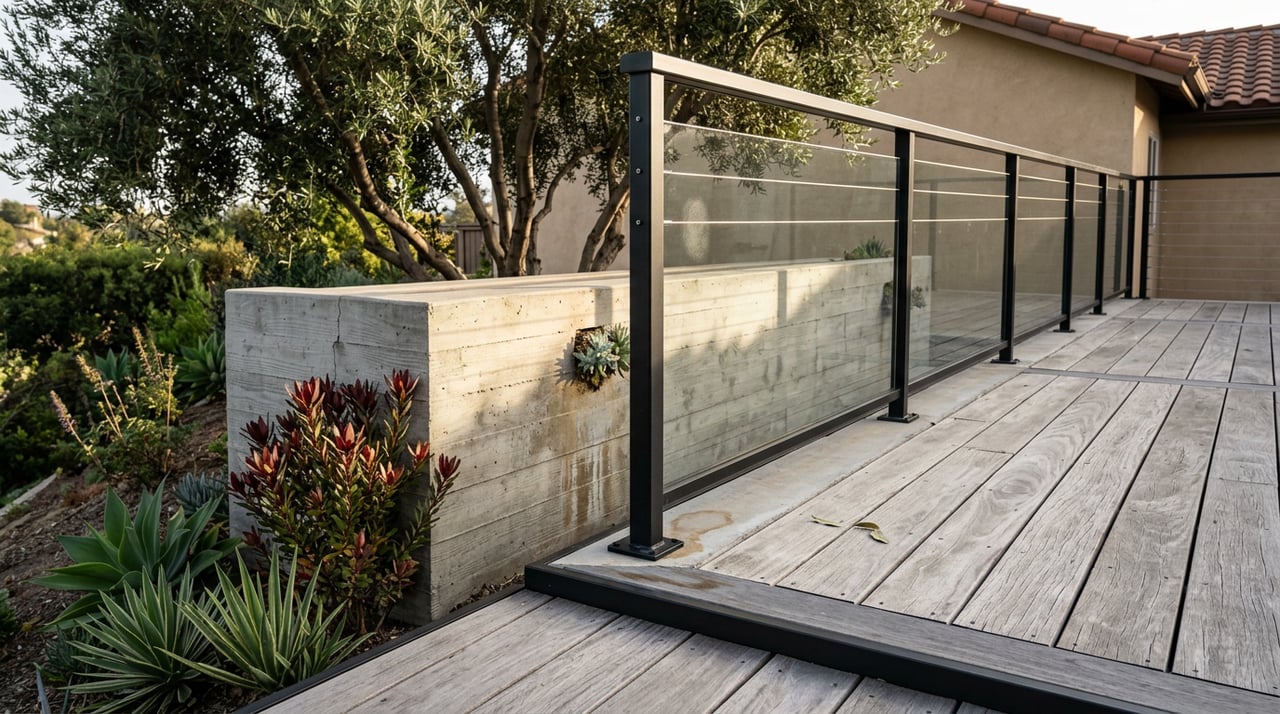
You find the house. It sits a few streets up from the harbor, the kind of lot where a primary suite addition over the garage would finally make sense of the floor plan. Your contractor walks the site, sketches the addition, and quotes a building permit timeline that sounds reasonable. Nobody mentions the second permit running underneath that one until the plans hit the counter at Dana Point City Hall.
That second permit is the one that actually decides whether the addition happens on your schedule. It doesn't show up on a listing sheet, and it doesn't scale down for a modest project. It is drawn parcel by parcel by a city ordinance that most buyers never open, and it treats a 1,000 square foot addition the same way it treats a full teardown.
The Permit Layered on Top of the Permit
A building permit checks whether your addition meets structural, electrical, and plumbing code. A Coastal Development Permit, or CDP, checks something different: whether the California Coastal Act allows that development at all. In Dana Point, once a parcel sits inside the Coastal Overlay District, a CDP application runs alongside the building permit for many exterior projects, and it is a discretionary review, not a form you fill out and pass automatically. The city's own zoning code spells out what triggers it in Chapter 9.69, and most projects are reviewed locally by the City of Dana Point, though some locations near tidelands or outside a certified Local Coastal Program stay under the direct or appellate authority of the California Coastal Commission.
The jurisdictional line even runs through the sand itself. On oceanfront lots, the city's permitting authority extends to the mean high tide line, and the Coastal Commission's jurisdiction picks up seaward of it, which is exactly the split that came up in a shoreline protection case on Beach Road earlier this year.
Four Coastal Zone Cases From Dana Point's 2026 Docket
The Planning Commission's record so far this year makes the range easy to see in one place.
| Address | Permit | Planning Commission Action | Project |
|---|---|---|---|
| 93 Monarch Bay Drive | CDP25-0020 & SDP25-0029(M) | Approved Jan. 26, 2026 | 1,084 sq ft addition across three areas, bringing the home to 3,624 sq ft |
| 35127 Beach Road | CDP24-0015 & SDP25-0027 | Continued from Dec. 8, 2025, heard Feb. 9, 2026 | Replace a temporary shoreline protection device with a 25-year permitted structure |
| 24632 Santa Clara Ave | CDP25-0021 | Approved April 27, 2026 | New 2,864 sq ft one-story home with 513 sq ft attached garage |
| 33951 Nauticus Isle | CDP25-0014 | Heard April 13, 2026 | Demolition of existing home and construction of a new single-family dwelling |
Four addresses, four completely different projects, and one common thread: none of them cleared with a standard building permit alone. The Monarch Bay Drive addition needed the identical hearing and notice process as the Nauticus Isle teardown, even though one added four bedrooms to an existing home and the other started from bare dirt. The Beach Road case shows the other edge of this system: an oceanfront property that also sits in the city's Floodplain Overlay District, where a seawall replacement needed its own coastal engineering analysis before the Commission would even consider a 25-year permit term.
What Actually Triggers the Review
The ordinance lists the categories of exterior work that pull a project into CDP review. The ones that catch remodel-minded buyers off guard most often are:
- Adding a story or a loft, or increasing a structure's height by more than 10 percent, a rule that also applies to detached structures like garages, fences, or docks
- Demolishing more than 50 percent of a structure's exterior walls
- Grading, or removing or placing vegetation, within 50 feet of a coastal bluff edge for a single-family home, or within 100 feet for other structures, or within 100 feet of a stream
There's a workaround for older homes that don't meet current standards. Under DPZC 9.63.030(a), a nonconforming structure can expand by more than 10 percent of its existing floor area if the addition meets today's zoning standards and, in the language the code actually uses, positively contributes to the neighborhood. That's the provision that let the Monarch Bay Drive addition move forward despite a nonconforming 12 foot front yard setback already on the lot.
Read the other direction, work that doesn't touch any of these triggers, a kitchen reface, new flooring, non-structural interior changes, typically stays with Building and Safety and never picks up the coastal layer at all. The ordinance defines the CDP requirement by what it lists, so anything outside that list is the category most homeowners can move through on a normal permit timeline.
The Deck Rule That Depends on How Steep Your Backyard Is
One of the more specific rules in Dana Point's code has nothing to do with the ocean directly and everything to do with grade. If your lot has less than a 5 percent slope, it isn't even treated as a slope area for deck purposes, and a deck can extend under standard setback rules. Between 5 and 15 percent grade, a deck can extend up to 8 feet past the top of the slope. At 15 percent grade or steeper, an at-grade or above-grade deck can't extend past the top of the slope at all, unless the Director of Community Development approves a minor Site Development Permit. And on blufftop lots inside the Coastal Overlay District, none of that matters: decks can't project past the bluff edge, period, a rule that overrides everything above it.
Two backyards a few percentage points apart in grade can end up with entirely different deck rights. That's not a hypothetical for hillside streets above the harbor. It's the kind of detail a geotechnical survey catches and a walkthrough never will.
The Clock Buyers Don't See
The public process itself takes time before a shovel ever moves. Notices for the Monarch Bay Drive hearing went out to property owners within a 500 foot radius and occupants within 100 feet, ran in a newspaper of general circulation, and were posted at City Hall, all before a hearing held roughly five weeks later. The Beach Road case needed a continuance, moving from a December 2025 hearing date to February 2026 before the Commission acted.
Once a CDP is approved, it can still be appealed, first to the City Council, and separately to the California Coastal Commission under DPZC Section 9.69.090, with any resulting litigation subject to a 90 day statute of limitations under California law. A 2026 change to state law, SB 963, converted what used to be an open-ended appeal window into a bounded one, which helps predictability without removing the appeal risk itself. And once a CDP clears every stage, the approval doesn't last forever. Discretionary permits in Dana Point become void two years after their effective date if construction hasn't started, unless the applicant requests an extension in writing before that window closes.
Why This Belongs in the Offer, Not the Punch List
If you're buying a coastal zone property in Dana Point with remodel plans already sketched out, the question to ask before you write the offer isn't whether the seller has a permit history. It's whether your specific project trips any of the triggers above, and whether the lot's slope, bluff proximity, or prior nonconforming status changes the answer. A pre-application conversation with the city's Community Development Department, before the contingency clock starts, tells you more than a general contractor's estimate can.
If you're selling, the same logic runs the other way. A buyer's inspector and lender will both notice when what's built doesn't match what's on file, and sorting that out during someone else's contingency period is a worse position than sorting it out before you list.
Frequently Asked Questions
Does every home in Dana Point's coastal zone need a CDP to remodel?
No. The requirement is tied to specific project types under Chapter 9.69, things like added height, major demolition, or grading near a bluff or stream. Interior work that doesn't touch the exterior or the structure typically doesn't add this layer.
How long does the CDP process actually take?
It varies by project. The Monarch Bay Drive addition moved from public notice to Planning Commission approval in about five weeks. The Beach Road shoreline case needed a continuance and took roughly two additional months. Add appeal time if a decision is contested, though SB 963's 2026 changes now put a ceiling on how long that appeal window can run.
Does this only apply to homes right on the beach?
No. The bluff setback rules apply at 50 feet from the bluff edge for single-family homes, and the stream setback applies at 100 feet, both well inland of the sand. The Coastal Overlay District covers a broader footprint than "oceanfront" alone.
What happens if a CDP decision gets appealed?
It can go to the Dana Point City Council, and separately to the California Coastal Commission under DPZC Section 9.69.090. Any court challenge after that is subject to a 90 day statute of limitations.
Coastal zone rules in Dana Point reward buyers and sellers who ask the right question early instead of the right question during escrow. If you're weighing a purchase with remodel plans attached, or getting a coastal property ready to list, Tom Bertog Group has spent decades working these exact streets and can help you get a straight answer before you're under contract. Call Tom for a personal market consultation.
