San Juan Capistrano is one of those rare Orange County communities where the history, landscape and modern real estate market are almost impossible to separate.
This is not a city that was created around a shopping center, a golf course or a collection of subdivisions.
San Juan Capistrano existed long before most of modern Orange County.
Mission San Juan Capistrano was permanently founded in 1776, and the community that grew around it passed through Indigenous, Spanish, Mexican, ranching, agricultural and eventually suburban eras. Preservation decisions made during the 1970s helped protect historic resources, open space and ridgelines rather than allowing the kind of dense development that transformed many surrounding areas.
That history still shapes what it feels like to live here.
Downtown, you can walk past adobe buildings, Mission walls and the old train depot.
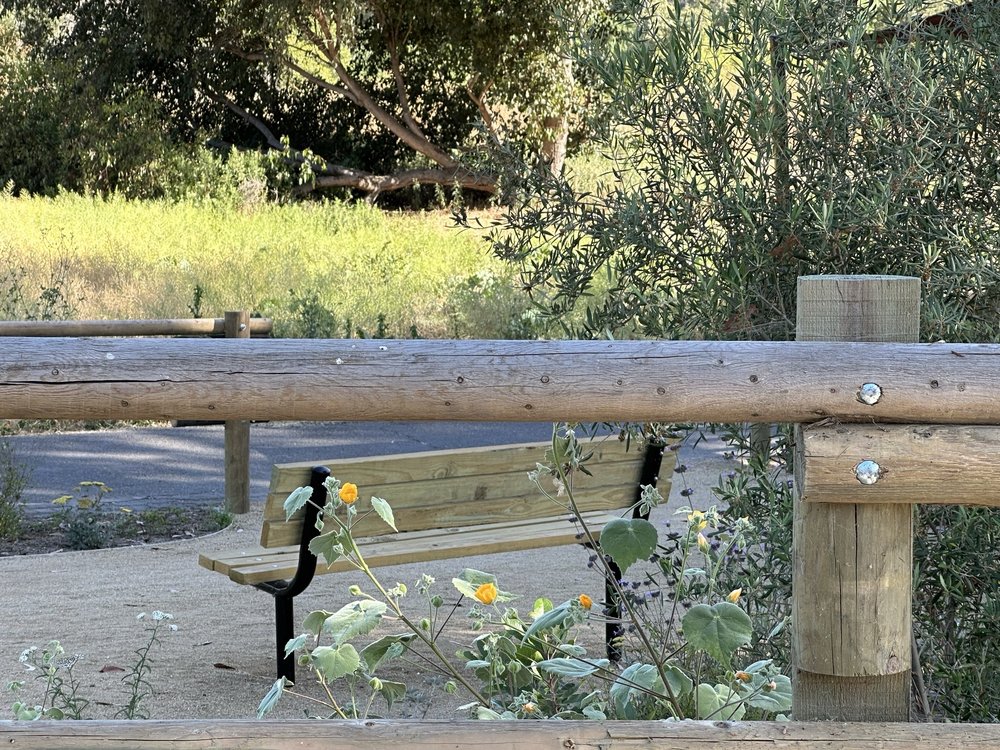
A few minutes away, horses are moving along multi-use trails.
Farther into the hills are guard-gated estates, custom homes, golf-course properties and large lots.
Closer to San Juan Creek are more traditional neighborhoods, condos, townhomes and 55+ communities.
And along the western edge, hillside neighborhoods begin to pick up coastal breezes and views toward Dana Point and the Pacific.
That combination is why I would never describe San Juan Capistrano simply as a historic town.
It is really several very different lifestyles sharing one remarkably distinctive city.
You cannot really understand San Juan Capistrano without understanding the Mission.
Mission San Juan Capistrano was permanently founded on November 1, 1776 and became the seventh of California's 21 Spanish missions. Its history also includes the Acjachemen people, whose lives and culture were profoundly affected by Spanish colonization, as well as later Mexican, American and immigrant influences.
Today the Mission includes the gardens, Serra Chapel, museum exhibits and the dramatic remains of the Great Stone Church.
But for residents, its importance extends beyond tourism.
The Mission is physically embedded into downtown San Juan Capistrano. Its bells, gardens, celebrations and architecture are part of the identity of the entire city.
And 2026 is especially significant: the Mission is celebrating its 250th anniversary, with special exhibits and programming throughout the year and an official 250th celebration scheduled for November 1, 2026.
That is not a marketing-created anniversary.
It is 250 years of local history.
Directly across the railroad tracks from downtown is Los Rios Street Historic District.
Los Rios is one of the oldest continuously inhabited residential areas in California, with historic cottages, adobe structures, gardens, narrow pedestrian paths and homes that sit incredibly close to cafés, shops and the train depot.
It is difficult to think of another place in Orange County that feels quite like it.
There are no broad six-lane boulevards running through the middle of it.
Instead, you find mature trees, old fences, cottages, patios, gardens and a street scale that feels almost rural.
The district is also home to some of San Juan Capistrano's best-known local businesses.
Ramos House Cafe occupies a historic cottage and has long been one of the area's destination brunch restaurants.
The Tea House on Los Rios offers afternoon tea and brunch in a restored cottage-and-garden setting.
Hidden House Coffee sits beneath mature trees and feels more like a neighborhood gathering place than a conventional coffee shop.
Living near Los Rios and the historic core offers something almost impossible to reproduce elsewhere in South Orange County: the ability to walk through actual California history as part of everyday life.
One of the biggest changes in recent San Juan Capistrano history is River Street Marketplace.
The project sits immediately beside the Los Rios Historic District and was deliberately designed around agrarian architecture rather than a conventional suburban shopping-center format.
By 2026, River Street includes a surprisingly strong collection of shopping and food.
Current retail includes Free People, Hobie Surf Shop, Tecovas, Seager, Toes on the Nose, May Martin, SALT., Wildfire Mercantile, Old 44 Vintage and several other boutiques.
Dining includes Finca, Capo Leisure House, Mendocino Farms, Ubuntu, McConnell's Fine Ice Creams, Fermentation Farm and the multi-concept Rodeo River Street food hall.
Another notable addition is Cowboy by Nick's, a new concept from the Nick's restaurant group, scheduled to open in fall 2026 with steaks, cocktails and a polished Western-inspired atmosphere.
This matters for real estate because downtown San Juan is no longer simply somewhere residents take visitors to see the Mission.
It is increasingly somewhere people actually spend an afternoon or evening.
Another unusually local feature is the San Juan Capistrano train station.
The historic depot sits between downtown and Los Rios and is served by passenger rail, which means people can arrive in San Juan Capistrano without a car and immediately walk to restaurants, the Mission, Los Rios and River Street.
Trevor's at the Tracks occupies the historic depot building and has one of the city's liveliest patios, with trains passing directly beside the restaurant.
That combination of Mission, railroad, restaurants, Los Rios and River Street creates one of the few genuinely walkable historic districts in suburban Orange County.
This is one of the most important differences between San Juan Capistrano and almost every coastal-adjacent city around it.
The equestrian culture is not decorative.
It is part of the planning of the city.
San Juan Capistrano maintains a network of multi-user trails designed for horses, hikers and bicycles, and the City's own Parks, Equestrian and Community Services Commission specifically addresses preservation of the equestrian and open-space lifestyle.
The community has more than 50 miles of trails, hundreds of acres of open space, and a substantial portion of the city preserved as open space.
You notice that as soon as you move away from downtown.
There are trail crossings where you may see horses.
Some estate properties have barns, stalls, paddocks or room for equestrian improvements.
And many of the city's most valuable residential areas were designed around access to trails and open land rather than conventional neighborhood parks.
The Rancho Mission Viejo Riding Park is one of the best examples of how deeply equestrian culture is embedded into San Juan Capistrano.
Located along La Pata, the facility hosts riding events and offers open riding opportunities.
The presence of a major riding facility inside the city reinforces something important:
In San Juan Capistrano, horses are still part of daily local life.
The city's Northwest Open Space and Reata Park area provide another side of San Juan.
This is where preserved land, equestrian uses, trail staging and natural landscapes come together.
The City's planning policies explicitly call for preserving the equestrian lifestyle and expanding hiking, biking and horse-trail connections.
For buyers who want acreage, horses or simply a less suburban atmosphere, these northern and eastern parts of San Juan can feel dramatically different from neighboring Dana Point or Laguna Niguel.
Hunt Club represents one of the strongest versions of San Juan Capistrano estate living.
The guard-gated community sits east of the freeway near the hills and equestrian corridor.
Homes are generally larger custom or semi-custom properties on substantial lots, and the neighborhood's identity is closely tied to privacy, trails, landscaping and an equestrian-country atmosphere.
Some properties have space for horses or equestrian improvements, while others function simply as large luxury estates.
This is not polished country-club living in the same way as Marbella.
Hunt Club feels more rustic, private and land-oriented.
That distinction is important.
A buyer looking for gated acreage and trail access may love Hunt Club and have very little interest in Marbella - even if the homes are priced similarly.
Marbella is the other major luxury identity in San Juan Capistrano.
This guard-gated community is centered around Marbella Country Club and offers estate homes, custom residences and properties overlooking fairways or surrounding hills.
The architecture tends to be more formal than the equestrian areas - Mediterranean, Spanish, traditional and custom luxury styles are common.
The lifestyle is also different.
Marbella appeals more strongly to buyers who want:
Hunt Club feels like estate country.
Marbella feels like private-club San Juan Capistrano.
That is an important difference for buyers to understand.
Rancho Madrina is another significant luxury neighborhood and one that buyers sometimes overlook because it receives less attention than Marbella or Hunt Club.
The gated community sits on elevated terrain and includes larger homes, wide streets and properties with valley, hillside and occasional distant coastal views.
Rancho Madrina generally feels newer and more residential than Hunt Club.
There is less emphasis on equestrian use and more emphasis on large luxury homes, views and gated privacy.
Some of San Juan Capistrano's most dramatic properties are tucked into hillside and canyon settings rather than traditional tract neighborhoods.
Areas such as Hidden Mountain Estates, Peppertree Bend and Stoneridge can offer a combination of:
These are exactly the kinds of places where comps become difficult.
Two homes may both be listed as San Juan Capistrano estates, yet one may sit on usable equestrian acreage while another occupies a steep view lot.
The acreage number alone does not tell the story.
Usability matters.
Access matters.
Topography matters.
Orientation matters.
And in hillside neighborhoods, driveway grade and street access can matter almost as much as square footage.
Los Corrales and Mission Hills Ranch represent another version of old San Juan.
These areas feel more rooted in the city's ranching and equestrian history, with larger lots, mature trees and a less formal streetscape than newer gated luxury developments.
Depending on the property, buyers may find room for horses, barns, workshops, pools or expanded outdoor living.
For someone who wants a polished entry gate and identical streetscape, these neighborhoods may not be the right fit.
For someone who wants land, individuality and old San Juan character, they can be exactly right.
The San Juan Hills area gives the city another identity entirely.
Homes climb the rolling terrain around San Juan Creek Road and San Juan Hills Golf Club.
The public 18-hole course is paired with a large practice facility and restaurant/event spaces, making it as much a neighborhood social hub as a golf destination.
Residential options around San Juan Hills range from attached and 55+ housing to larger detached homes and hillside properties.
Views can include golf course, hills and surrounding open space.
Again, one label - San Juan Hills - covers several very different housing types.
San Juan Capistrano also has established 55+ housing.
San Juan Hills East and San Juan Hills West are age-qualified communities around the San Juan Creek Road area.
This can appeal to buyers who want a lower-maintenance lifestyle while remaining close to:
It is a completely different product from the city's luxury estate neighborhoods, which is another example of San Juan's unusually broad housing inventory.
On the western side of San Juan Capistrano, Pacifica San Juan feels much more like a newer coastal-influenced master-planned community.
The architecture, streetscapes and community amenities are noticeably more contemporary than old San Juan.
Because of its western location and elevation, certain properties can have strong hill, canyon and distant ocean views.
It also sits closer to Dana Point and the coast.
For buyers who like San Juan Capistrano but want newer architecture and a more polished planned-community environment, Pacifica San Juan deserves a completely separate comparison from Hunt Club, Los Corrales or downtown.
The Farm represents an even newer side of San Juan Capistrano.
This gated residential neighborhood along the eastern side of the city offers newer construction, contemporary floor plans and community amenities.
It is almost the opposite of a historic Los Rios cottage or older equestrian estate.
That range is what makes San Juan Capistrano fascinating from a real estate standpoint.
Within one city you can choose:
Very few South Orange County communities offer that breadth.
San Juan Capistrano now has one of South Orange County's most interesting restaurant clusters.
Heritage Barbecue sits directly across from the Mission and has become a destination for Central Texas-style smoked meats.
The location matters almost as much as the food.
You can have barbecue, walk across the street to the Mission and then continue through the historic core.
Trevor's at the Tracks is one of the city's best indoor-outdoor gathering spots.
Its location inside the historic train depot - and immediately beside active tracks - is something you cannot recreate in a new development.
Ramos House Cafe remains one of the most recognizable Los Rios brunch experiences.
The cottage, patio and garden setting are as much a part of the experience as the menu.
The Tea House on Los Rios turns a meal into more of an occasion, with garden seating and traditional afternoon-tea service inside the historic district.
Hidden House Coffee is one of the places I would point to when describing what makes San Juan feel local.
It is tucked into Los Rios rather than placed in a strip center and works as a genuine neighborhood gathering spot.
Ellie's Table occupies the historic Egan House and adds another strong breakfast, bakery and lunch option close to the Mission and downtown.
And then there is River Street, which has dramatically expanded the choices even further.
No hyper-local San Juan page should pretend Swallow's Inn does not exist.
It is an old-school country-western bar directly in the historic core, known for live music, dancing and a decidedly unpolished atmosphere.
It is not meant to be elegant.
That is exactly the point.
San Juan Capistrano still has places that feel like they belong to the town rather than to a corporate lifestyle center.
Swallow's Inn is one of them.
The Swallows Are Still Part of the City's Identity
The Return of the Swallows is not simply a tourism slogan.
The tradition is tied to St. Joseph's Day on March 19 and has been celebrated publicly for generations.
The annual Swallows Day Parade remains one of San Juan Capistrano's signature events, with equestrian units, wagons, bands and Old West traditions moving through downtown.
The Fiesta Association also organizes a broader calendar that includes events such as the Pet Parade, Fiesta Grande, Hoos' Gow Day and Mercado Street Faire.
This is another important difference between San Juan and a conventional master-planned community:
Many of its traditions predate the houses.
San Juan Capistrano is especially interesting right now because the Mission is celebrating its 250th anniversary throughout 2026.
Programming includes historic artifacts, exhibits, lectures, Music Under the Stars, the Return of the Swallows celebration and the official November 1 anniversary event.
The City also continues its San Juan Summer Nites concert series at Historic Town Center Park.
So even after nearly 250 years, downtown San Juan is not functioning like a preserved museum district.
It remains a working community center.
San Juan Capistrano has an extensive network of multi-use trails connecting neighborhoods, open space and neighboring communities.
City trail maps show connections toward:
Many routes are designed to accommodate hikers, cyclists and equestrians.
For buyers, trail adjacency can be both a lifestyle benefit and a property-specific consideration.
Some people love having trail access directly behind or near a property.
Others prioritize more separation.
That is exactly the kind of micro-location issue that does not show up in a simple bedroom-and-square-foot comparison.
San Juan Capistrano's park system includes more than two dozen city park locations and recreation facilities.
Locally important examples include:
Los Rios Park is particularly distinctive because it sits right beside the historic district rather than in a conventional suburban neighborhood.
San Juan Capistrano is served by Capistrano Unified School District, and the school landscape is another important part of the city's identity.
Local public schools include Kinoshita Elementary, Del Obispo Elementary, Marco Forster Middle School and San Juan Hills High School, among others.
Buyers should always verify exact attendance boundaries by property address because assignments can change.
San Juan Capistrano is also home to JSerra Catholic High School, located on Junipero Serra Road just north of the historic core.
Its campus and athletic facilities form a major educational presence along the I-5 corridor.
St. Margaret's Episcopal School is another major local institution.
The independent preschool-through-grade-12 college-preparatory school sits on a roughly 25-acre campus along La Novia Avenue and has been part of the San Juan community since 1979.
The school is closely integrated into community life and participates in local traditions including the Swallows Day Parade and San Juan Summer Nites.
Its location is also one reason neighborhoods around Marbella, Mission Hills and La Novia can be particularly attractive to some private-school families.
San Juan occupies a very strategic location in South Orange County.
The I-5 runs directly through town.
Ortega Highway provides the major east-west connection toward the inland valleys.
La Pata connects south toward Talega and San Clemente.
Camino Capistrano runs north-south through the older city.
Dana Point and Doheny are only minutes away.
And the downtown train station gives residents passenger-rail access that most South Orange County cities do not have in their actual historic core.
That gives San Juan an unusual combination: semi-rural atmosphere without being geographically isolated.
This is probably the most important thing I would want a buyer to understand.
You cannot value San Juan Capistrano well by simply looking at price per square foot.
A property's value may be heavily influenced by:
A 4,000-square-foot home on a standard lot in one neighborhood can be an entirely different property from a 4,000-square-foot home on usable acreage somewhere else.
Even view is not one category here.
You may be looking at:
Those distinctions matter.
What I like most about San Juan Capistrano is that it has resisted becoming interchangeable with the rest of Orange County.
You can still hear Mission bells downtown.
You can walk through Los Rios under mature trees.
You can watch a train pull into the old depot while having lunch.
You can buy barbecue across the street from a 250-year-old Mission.
You can shop at a brand-new River Street Marketplace without losing sight of the city's agricultural roots.
You can see horses crossing local trails.
You can live in a custom equestrian estate.
You can live behind the gates of Marbella.
You can choose a golf-course neighborhood.
You can buy a newer home at The Farm or Pacifica San Juan.
You can choose a 55+ community around San Juan Hills.
And you can be at Dana Point Harbor or Doheny within minutes.
That range is extraordinarily difficult to find elsewhere in South Orange County.
San Juan Capistrano is not simply historic.
It is not simply equestrian.
It is not simply luxury.
And it is not simply suburban.
It is one of the few places in Orange County where history, horses, open space, estate living, golf, a genuinely walkable old downtown and modern South Orange County convenience still coexist.
That is what makes San Juan Capistrano special.
And that is why choosing the right neighborhood here requires considerably more than looking at a map of homes for sale.
34,998 people live in San Juan Capistrano, where the median age is 44.8 and the average individual income is $60,670. Data provided by the U.S. Census Bureau.
Total Population
Median Age
Population Density Population Density This is the number of people per square mile in a neighborhood.
Average individual Income
There's plenty to do around San Juan Capistrano, including shopping, dining, nightlife, parks, and more. Data provided by Walk Score and Yelp.
Explore popular things to do in the area, including Arroyo Bird House Park, Pacific Women's Center, and Tease Tans.
| Name | Category | Distance | Reviews |
Ratings by
Yelp
|
|---|---|---|---|---|
| Active | 2.22 miles | 1 review | 5/5 stars | |
| Beauty | 1.54 miles | 89 reviews | 3.7/5 stars | |
| Beauty | 2.38 miles | 0 reviews | 0/5 stars | |
| Beauty | 2.62 miles | 0 reviews | 0/5 stars | |
|
|
||||
|
|
||||
|
|
||||
|
|
||||
|
|
||||
|
|
San Juan Capistrano has 12,095 households, with an average household size of 2.87. Data provided by the U.S. Census Bureau. Here’s what the people living in San Juan Capistrano do for work — and how long it takes them to get there. Data provided by the U.S. Census Bureau. 34,998 people call San Juan Capistrano home. The population density is 2,614 and the largest age group is Data provided by the U.S. Census Bureau.
Total Population
Population Density Population Density This is the number of people per square mile in a neighborhood.
Median Age
Men vs Women
Population by Age Group
0-9 Years
10-17 Years
18-24 Years
25-64 Years
65-74 Years
75+ Years
Education Level
Total Households
Average Household Size
Average individual Income
Households with Children
With Children:
Without Children:
Marital Status
Blue vs White Collar Workers
Blue Collar:
White Collar: