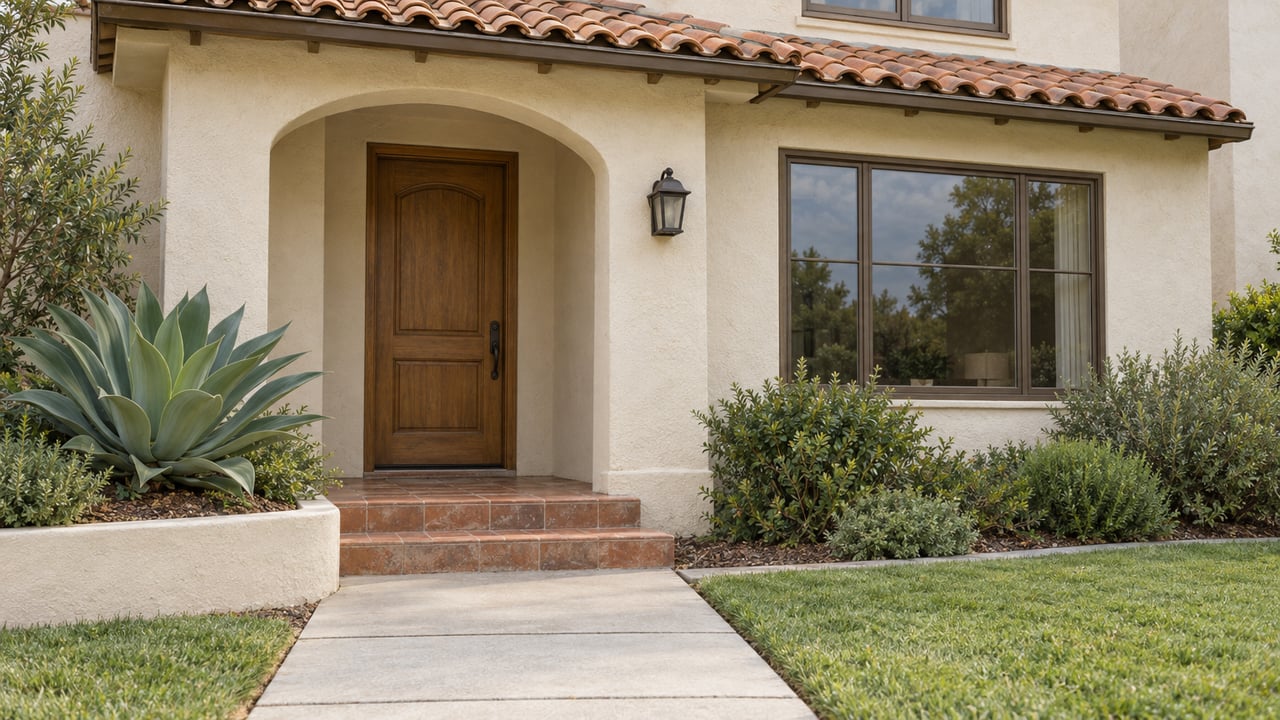
Why a Forster Ranch Home Can Look Detached but Still Be a Condo
If you're looking at homes in Forster Ranch, it is easy to assume that a place with its own driveway, garage and backyard must be a traditional detached single-family property. That is not always the case. Several established San Clemente communities have freestanding homes that are legally condominiums, and the distinction can matter long after the showing is over.
When I help buyers compare these properties, I want to get beyond the photographs. We need to know what the owner actually owns, which parts of the property may be common area, who maintains the exterior, and which association rules apply. Those answers can affect renovations, insurance, monthly costs and future resale. I start with the legal ownership, then move to the floor plan and location.
Quick Answer: Four Communities, Two Ownership Types
The City of San Clemente's revised Forster Ranch Specific Plan identifies Casablanca as 74 attached-condominium homes. It lists The Colony as 64 detached condos, Del Cabo as 50 detached condos, and Villamar as 35 detached condos. These are the City's development counts, not the number of homes available for sale. For the official classification, see the City of San Clemente's Forster Ranch Specific Plan.
In other words, a buyer choosing among these four neighborhoods is comparing more than architectural style. Casablanca begins with an attached-condominium layout. The Colony, Del Cabo and Villamar can feel more like detached houses, but that does not turn their recorded ownership structure into conventional single-family lots.
Start With the Legal Property, Not the Listing Label
A real estate website may call one of these properties a house, a condo, a townhome or even a single-family residence. Those words are sometimes describing how the building looks rather than the way title is held. The better starting point is the recorded condominium plan, preliminary title report, legal description and association documents.
A condominium owner generally owns a defined separate interest along with rights associated with common areas. The actual boundaries of the separate interest, and whether a patio or yard is privately owned or designated for exclusive use, come from recorded documents. I would never promise a buyer that they own the land beneath a detached condo simply because a fence surrounds it.
That is also why I avoid relying on the 'lot size' shown on a listing site. In a condominium development, the displayed figure can refer to a larger shared parcel or an assessor entry rather than an individually owned yard. A large number on the screen is not a substitute for the recorded condominium plan.
Casablanca: An Attached-Condominium Option on Domador
Casablanca is the most straightforward attached-condominium comparison of these four communities. The neighborhood is associated with Domador, off the Camino de los Mares side of Forster Ranch, and dates to the mid-1980s. Historical sales show a mix of layouts, including smaller two-bedroom configurations and larger three-bedroom homes. Some records identify one-level floor plans, although actual availability varies.
My first questions here are practical: Is it an end unit? Where are the living spaces relative to the bedrooms? Does it have a private-feeling patio or yard area, and exactly what can the owner change? Two similarly sized Casablanca units may differ considerably in light, privacy, stairs, outlook and upgrades.
Past listings have described community pool and tennis amenities, but I would verify current access, rules and what dues actually cover rather than assume that every amenity is available under the same terms today. The individual unit's maintenance history and its association documents are just as important as the community name.
The Colony: Detached Living With Condominium Ownership
The Colony, also marketed as Colony at Forster, is a useful reminder that detached-condominium does not mean apartment-style living. The City's Specific Plan identifies 64 detached condominium homes in this tract. Properties associated with streets such as Pavoreal and Calle Emilia may offer the separation and outdoor areas many buyers want from a freestanding residence.
I would still examine the yard very carefully. How much space is actually usable? Is the side yard functional? Does a fence define a private-feeling outdoor area, and do the governing documents give the owner exclusive-use rights to that area? Those are different questions from whether a residence shares a wall.
For buyers comparing The Colony with a traditional single-family home nearby, I would also ask about exterior maintenance obligations, roof and insurance responsibilities, and whether proposed upgrades need association approval. A detached building can still have condominium-specific maintenance and financing considerations.
Del Cabo: Larger-Home Features Do Not Change the Legal Structure
Del Cabo stands apart because historical property records include substantial detached residences with larger floor plans, multiple bedrooms and sizable garages. Some listings describe features such as generous living space, more than one entertaining area, and landscaped yards. These are reasons a buyer might initially think of Del Cabo as a conventional detached-home neighborhood.
But the City's land-use table classifies Del Cabo's 50 homes as detached condominiums. A larger home, an attractive exterior or a substantial-looking backyard does not remove the need to understand the condominium plan and association obligations. I would want to see both the home's physical condition and the documents that define ownership and maintenance.
The specific outdoor setting matters here, too. Some homes may have very different orientations, privacy levels and usable yard areas. If a buyer wants to add a pool, alter landscaping, build an outdoor kitchen or change a fence, the practical question is not only what fits. It is what the City permits and what the association documents allow.
Villamar: A Smaller Detached-Condo Neighborhood
Villamar is another small pocket that deserves a closer look because it may not appear in a buyer's first search for condominiums. The City's plan lists 35 detached condominium homes. Historical resale records associate the community with Las Posas and include freestanding residences with two-story configurations, private outdoor spaces and attached garages.
At Villamar, I would put the legal paperwork next to the listing details before comparing prices with nearby detached homes. An MLS entry may say 'no common walls' and 'house' while identifying the property subtype as condominium. Those statements can all describe the same residence without being contradictory.
I would also compare how the property sits on the street. The approach, driveway grade, neighboring elevations and rear-yard usability can change its appeal significantly. That is true in almost every Forster Ranch community, but it is especially important when marketing photographs make a detached condo look like a traditional lot-and-house property.
The Ownership Checklist I Use Before Comparing Prices
1. Confirm what is individually owned
Review the title materials, recorded condominium plan, governing documents and any available survey or site exhibit. Ask where the individual unit ends and the common area begins. If a yard, driveway or patio is designated for exclusive use, determine the exact rights, limitations and maintenance obligations attached to it. A fence or landscaped boundary is not definitive proof of ownership.
2. Identify every association and fee
Ask for current statements showing all applicable association dues—not just a figure copied from an older listing. Confirm which services, amenities and maintenance responsibilities each assessment covers. Look for transfer fees, proposed increases, special assessments or other costs. If there are multiple association layers, the total monthly expense is what matters.
3. Read the budget, reserves and meeting minutes
I want buyers to review financial statements, reserve studies, recent meeting minutes and notices of planned work or assessments. These may provide context about future maintenance and expenses. The California Department of Real Estate emphasizes the importance of reviewing common-interest development governing documents; its buyer guidance on common-interest developments is a useful starting point. For legal or financial interpretations, buyers should consult the appropriate professionals.
4. Match insurance to the actual responsibility
Do not assume that the association insures every part of a detached condo, or that a standard homeowners policy automatically fills every gap. Ask for the association's current insurance declarations and responsibility schedule, then speak with an insurance professional about the owner's coverage, deductibles and possible loss assessments. The California Department of Insurance's residential insurance guide explains why condominium policies and association coverage need to be considered together.
5. Ask your lender to review the project early
Condominium financing can involve project-level questions in addition to a borrower's income and credit. Requirements depend on the loan program, lender and property, so I would have the lender identify any documentation or approval concerns before the buyer is deep into escrow. A detached condominium is not automatically treated the same as a fee-simple detached lot for every financing program.
How I Compare Yards, Privacy and Total Cost
The first question I ask about outdoor space is what you can actually use. A beautifully landscaped patio may be perfect for someone who wants a quiet place to sit without much upkeep. Another buyer may need a level lawn, outdoor dining area or room for pets. I want to measure that space, study the elevation of neighboring homes and check restrictions before calling one property a better value.
I also look closely at the monthly ownership budget. The asking price is only one part of it. Depending on the address, there may be HOA dues, property taxes, possible special assessments, different insurance responsibilities and maintenance items that fall to the owner. A home with fewer shared maintenance obligations is not necessarily cheaper to own, and a property with an HOA is not automatically more expensive over time. The comparison has to be specific.
For an example of conventional detached single-family neighborhoods nearby, my Glen Ridge Estates vs. Rimrock comparison examines how lots and layouts differ even when the legal ownership form is similar. The contrast can help buyers understand why a detached condominium should not be evaluated by appearance alone.
What About Tocayo Canyon and Other Forster Ranch Neighborhoods?
These four communities are not the only place in Forster Ranch where ownership terminology matters. The City's plan also classifies Tocayo Canyon as detached-condominium development, while Tocayo Ridge and Tocayo Hills are shown as detached single-family. I cover that difference in my Tocayo Ridge vs. Tocayo Hills vs. Tocayo Canyon guide.
If your real priority is larger newer-era floor plans or a different amenity package, that may take us into Forster Highlands neighborhoods such as Compass Pointe and Cantomar. My Compass Pointe vs. Cantomar comparison is a separate look at those choices. Buyers also interested in the gated Reserve neighborhoods can read my Reserve North, South, East and West comparison. These are different searches; they should not be lumped into a single 'Forster Ranch condo' category.
The broader Forster Ranch neighborhood guide helps put these smaller communities into context without treating the entire area as one housing tract.
Which Community Would I Show You First?
If you want an attached-condominium layout and are open to comparing different interior plans, Casablanca is a reasonable place to start. If having no shared walls is important, I would include The Colony and Villamar, then look carefully at Del Cabo when the available home's size and layout fit your needs. None of those suggestions is a guarantee of price, availability or low-maintenance ownership.
I would change the order based on your priorities. Someone who values main-floor living should focus on the actual layout, not assume that every detached home is easier to navigate. Someone who wants room to entertain outdoors should focus on the usable area and the rights to improve it. And someone trying to minimize monthly expenses needs a full HOA and insurance comparison, not a shortcut based on the neighborhood name.
When the right home appears, I would rather get those details settled early than discover halfway through escrow that the patio, roof or financing works differently than expected.
Frequently Asked Questions About Forster Ranch Condos
Are there detached condos in Forster Ranch?
Yes. San Clemente's revised Forster Ranch Specific Plan identifies The Colony, Del Cabo, Villamar and Tocayo Canyon as detached-condominium developments. The actual ownership documents for a specific listing should still be reviewed.
Is Casablanca attached or detached?
The City's land-use table classifies Casablanca as attached condominium housing. Individual floor plans, common-wall conditions, outdoor space and association coverage vary by unit and should be confirmed during the purchase process.
Does a detached condo mean I own my backyard?
Not necessarily. The yard may be part of the separately owned unit, an exclusive-use common area, or another arrangement defined by the recorded condominium documents. A fenced yard is not proof of a separately owned lot.
Can I remodel, add a pool or change the landscaping?
Possibly, but permission depends on property boundaries, easements, City requirements and association governing documents. Buyers should verify approvals before budgeting for a future project or treating an improvement as guaranteed.
Do all Forster Ranch condos have the same HOA dues?
No. Association structures and expenses can differ by community and change over time. I would obtain current dues, budgets, reserve information and any assessment notices for the exact property.
Is a detached condo harder to finance or insure?
Not always, but the lender and insurer may need condominium-specific information. Project eligibility, master-policy coverage and owner responsibilities depend on the community and loan or insurance program. Check early with the appropriate professionals.
Is one of these neighborhoods the best value?
There is no reliable one-size-fits-all answer. I would compare recent sales within the same legal ownership type and similar floor plans, then adjust for condition, usable outdoor space, street, privacy, amenities and monthly carrying costs.
My Bottom Line on Forster Ranch Condos
The best lesson from Casablanca, The Colony, Del Cabo and Villamar is that the way a home looks does not always tell you what you are buying. A detached condo may offer many of the physical features buyers associate with a standalone house, but its recorded ownership, maintenance responsibilities and association obligations can be different.
If we're looking at these neighborhoods together, I want to understand your priorities first. Then we can compare the actual homes: the layout, outdoor space, legal boundaries, monthly expenses and long-term flexibility. Getting those details right is more useful than trying to decide which community name sounds best.
Tom Bertog
Tom Bertog Real Estate | San Clemente, CA
Serving Orange County since 1989