Welcome to
Southwest
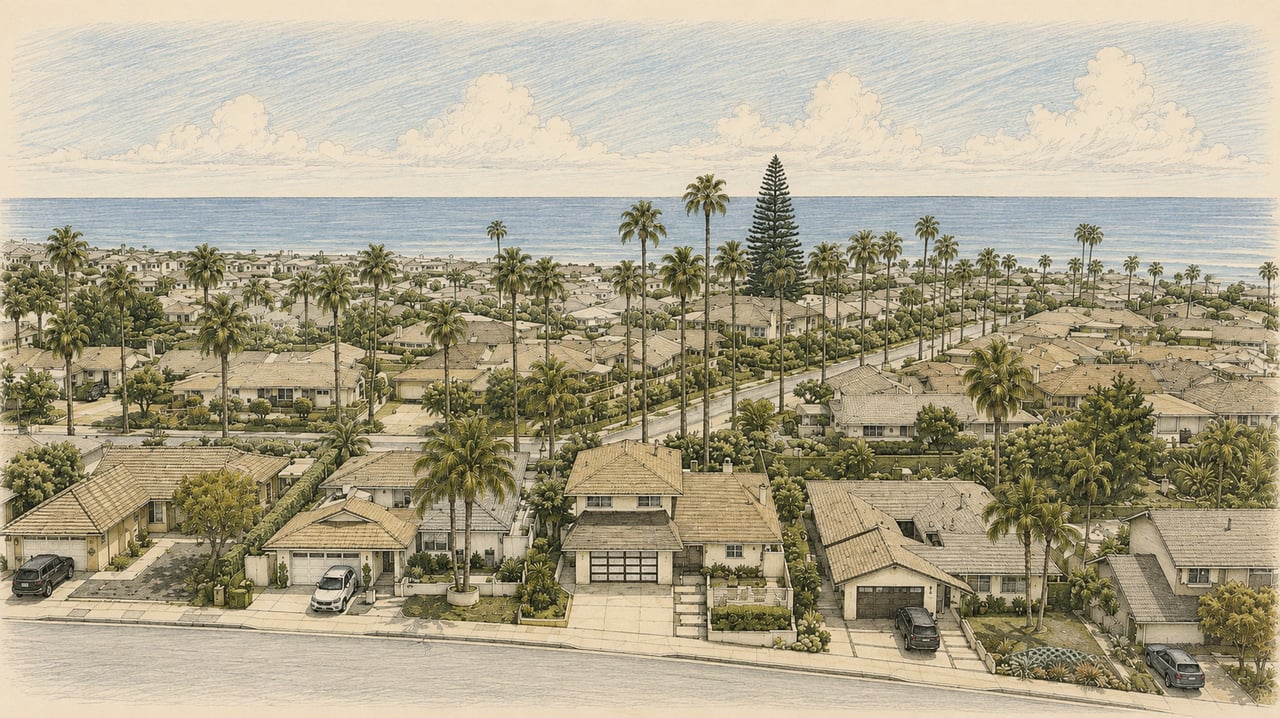
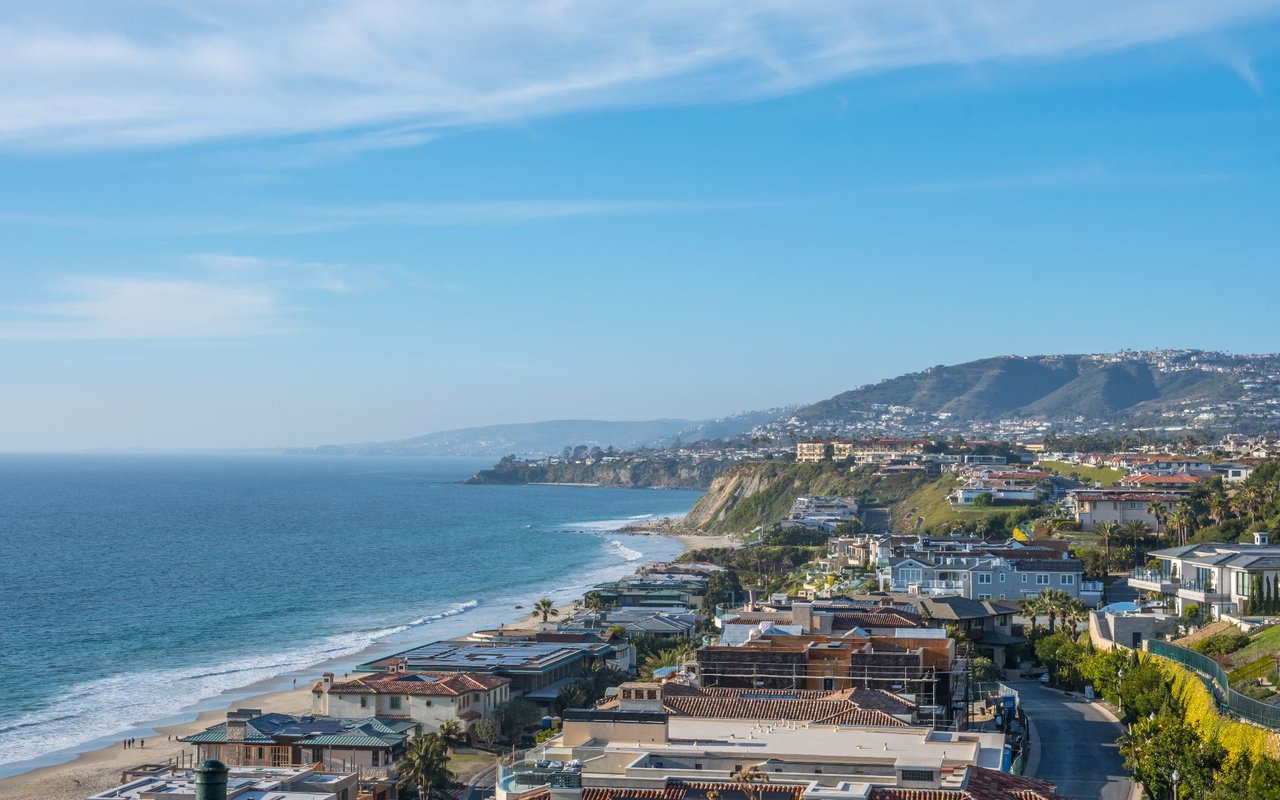
Discover a peaceful coastal community offering Spanish-style charm, tree-lined streets, and bluff views.
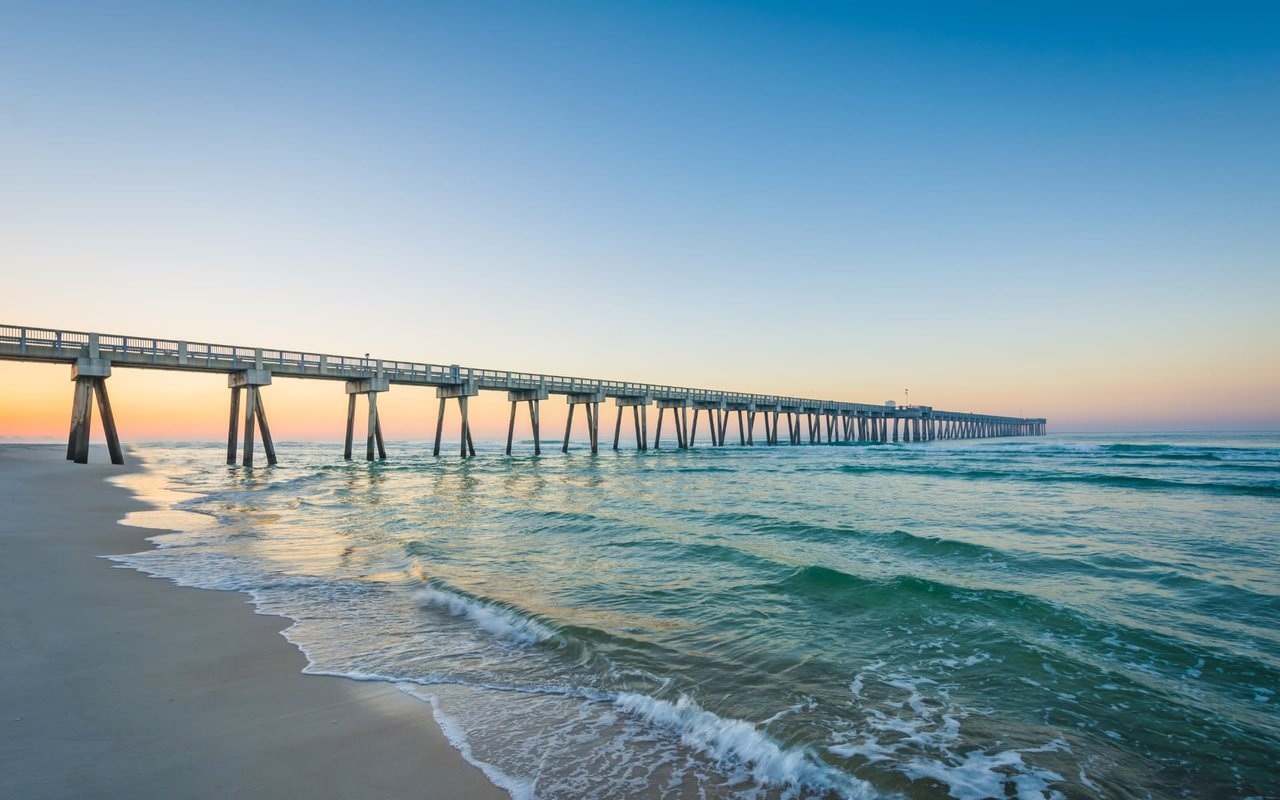
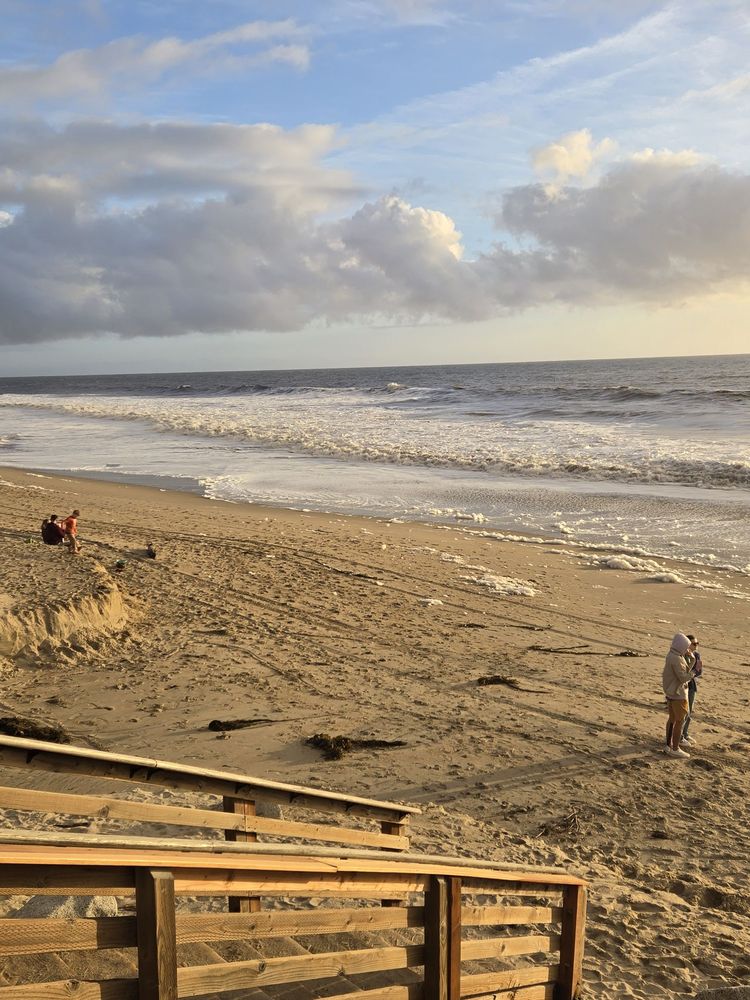
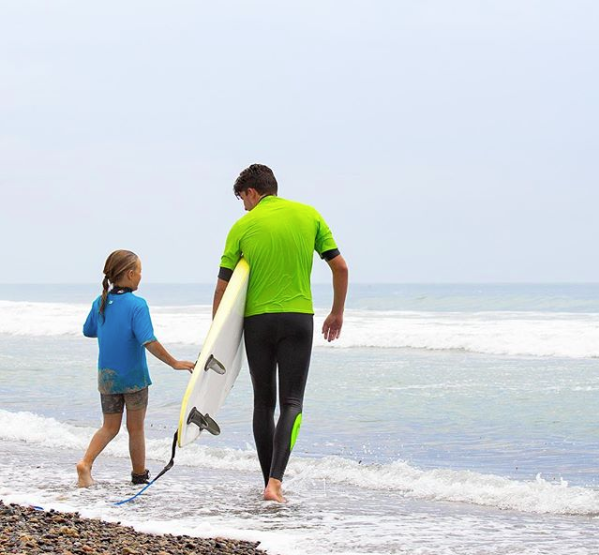
This is the San Clemente many people picture when they imagine carrying a surfboard toward the water, walking the bluff above the Pacific, riding the Beach Trail toward the Pier, or living on a residential street where the ocean is part of the daily routine. T-Street, The Hole, Lost Winds, Riviera, The Loop, La Ladera and the gated communities farther south all belong to Southwest, but they do not live the same way.
That is why I do not describe Southwest as one single neighborhood. For buyers, the useful question is not simply whether a home is in Southwest San Clemente. It is which pocket, which block, which beach access, what elevation, what view, what parking, what lot configuration and how the property actually functions day to day. For sellers, those same micro-location details are often the features that deserve the most attention in marketing.
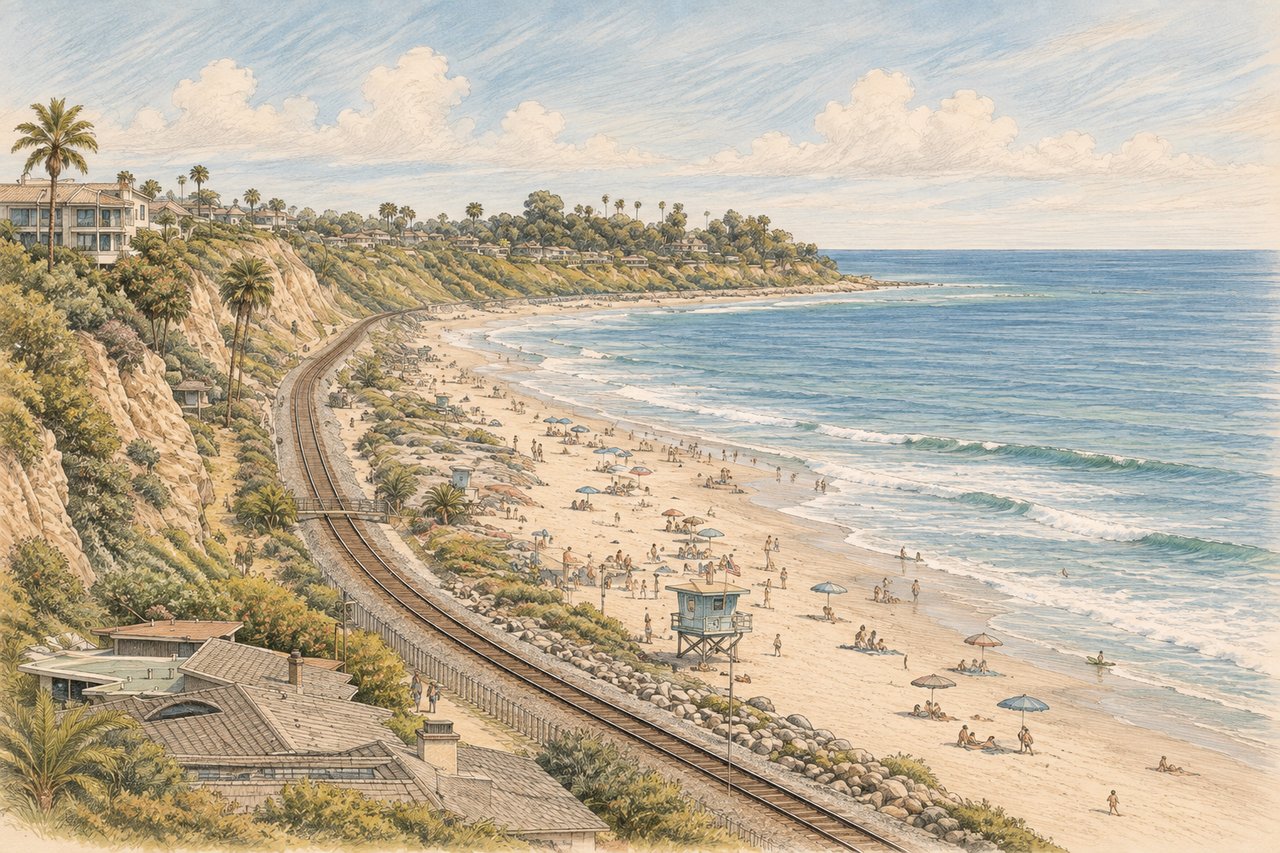
Where Southwest San Clemente Sits
Southwest San Clemente is generally the coastal residential area west of Interstate 5 beginning around Trafalgar Lane and continuing south through the T-Street, The Hole, Lost Winds and Riviera areas, then toward Calafia, San Clemente State Beach and the gated communities near the Orange County–San Diego County line. Most of the area is in the 92672 ZIP code.
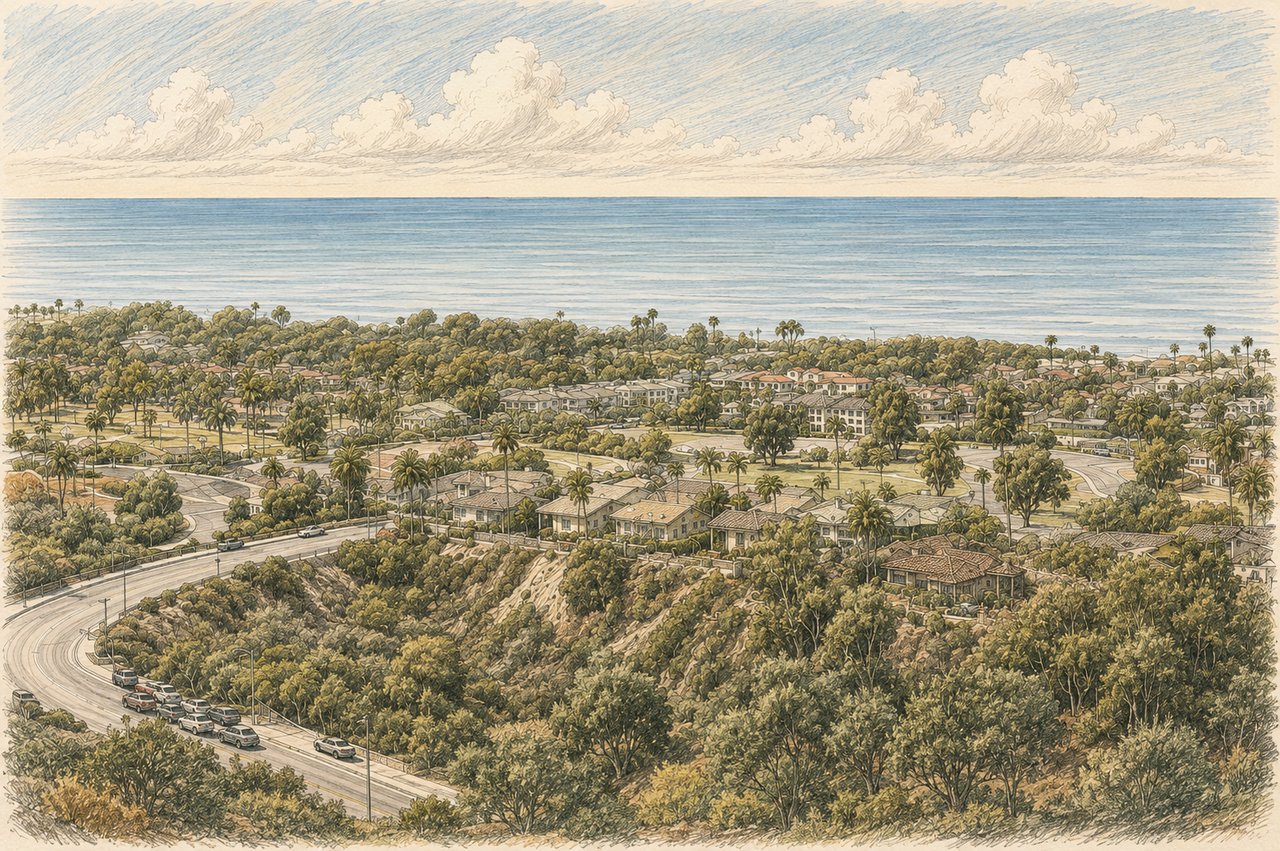
The Pacific defines the western edge, but the bluffs, coastal canyons, railroad corridor and sloping street pattern determine how the neighborhood actually works. Unlike a master-planned community, Southwest was built over many decades. Streets respond to the terrain, some blocks sit high above the water, and access to the beach can depend on a particular stairway, pedestrian bridge, underpass or walking route rather than simple straight-line distance.
For the larger citywide context, see my San Clemente community guide. Southwest makes the most sense when you compare it with the Pier area, Southeast San Clemente and the inland hillside neighborhoods rather than treating every coastal location as interchangeable.
One of the most useful local shortcuts in parts of Southwest is the 100-, 200- and 300-block pattern. It is not a perfect rule for every street, but it helps explain why two addresses on the same named street can feel very different.
As a general pattern, lower-numbered blocks sit farther inland and higher-numbered blocks tend to move closer to the ocean, bluff, beach access and Beach Trail. That can create a meaningful lifestyle and value difference. A property nearer the 300 block may put the coast into the daily routine, while an inland block can offer easier parking, a more usable lot, a different street feel or a different entry point into the same general neighborhood.
I still would not price or evaluate a home from the block number alone. Elevation, lot orientation, neighboring rooflines, alley access, street width, garage functionality, view corridor and the actual route to the beach all matter. Southwest rewards a property-by-property approach.
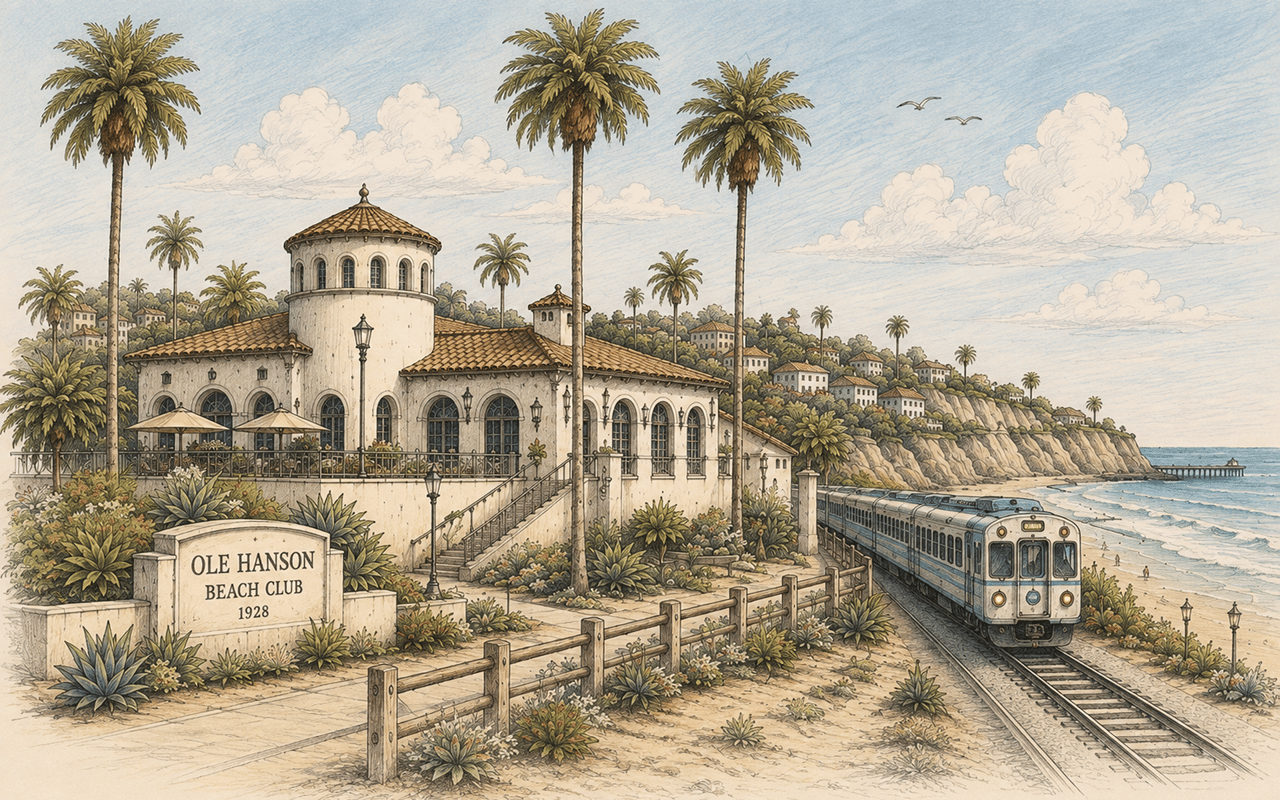
T-Street is one of the most recognizable names in San Clemente. The name comes from the Trafalgar/Esplanade beach area, but locally it describes much more than one access point. It is a lifestyle reference tied to surfing, beach days, the pedestrian bridge over the rail corridor, the Beach Trail and the residential streets rising above the water.
West Avenida Valencia, Esplanade, Paseo de Cristobal and the surrounding streets contain some of Southwest’s most coveted positions. Some homes are prized for immediate beach access. Others sit higher and trade a few extra minutes of walking for stronger ocean or sunset views. Still others have little or no major view but benefit from a quiet street, a usable yard, better parking or a particularly functional floor plan.
T-Street itself has concessions, restrooms, fire rings and metered parking. That makes it a different everyday beach experience from quieter access points farther south. For some buyers, having a more serviced beach nearby is a major advantage; for others, being a little removed from the activity is part of the appeal.
If T-Street is the reason someone wants Southwest, I want that buyer to physically walk the route from the property. A home that appears very close on a map can involve stairs, grade changes or a route that feels different when you are carrying chairs, children, a wagon or a surfboard. The walk back uphill matters too.
Just south of T-Street is a much smaller local reference point known as The Hole, also called Boca del Canon Beach. It sits below the bluff near Boca del Canon and La Rambla. It is not as obvious to an out-of-area buyer as T-Street or Calafia, which is exactly why local knowledge matters here.
The beach access is associated with the La Ladera area and connects into the coastal trail system. The physical setting feels more tucked into the bluff than T-Street, and the road pattern around Boca del Canon is very different from the open grid farther inland. For a buyer who wants a quieter pocket near T-Street without living directly around its main access, this is worth understanding.
La Ladera also matters because it is one of Southwest San Clemente’s gated enclaves, but it is geographically separate from the cluster of gated communities at the far southern end of town. That distinction is easy to miss when every gated community is grouped together in a generic neighborhood description.
Lost Winds is the local name commonly used for Lasuen Beach, and it has a different feel from T-Street. The public access is reached from the residential streets above the beach, and the sand can feel more tucked away from the Pier and downtown activity. The City identifies Lasuen as a public beach access with stairs and volleyball courts.
Calle de Los Alamos, Calle Lasuen and the neighboring bluff streets are important reference points here. Homes in this pocket may combine bluff proximity, whitewater or horizon views, quieter residential surroundings and access to a beach many locals use as part of their regular routine rather than as a destination reached by car.
The tradeoffs are highly address-specific. Some lots are narrow. Some homes have steep pedestrian access or limited guest parking. Some views are spectacular from upper levels but much less significant from the yard. A property can be extremely close to Lost Winds and still live very differently from another home only a few doors away.
Continue south and Riviera becomes another distinct pocket of Southwest San Clemente. Riviera is more removed from Pier activity, with residential streets that feel closely tied to the beach below. The Riviera access is one of the City’s recognized coastal access points, reached by stairs and a passage through the coastal rail corridor.
Avenida de la Riviera, Plaza a la Playa and nearby streets illustrate why Riviera needs to be evaluated as its own micro-market. You will see original ranch and mid-century homes, heavily remodeled properties, cottages and major custom construction. Larger lots can appear here, but lot shape, grade and privacy vary significantly.
Riviera appeals to buyers who want a strong beach connection without being in the middle of downtown San Clemente. It can feel quieter, but that does not make every property automatically private. Lot placement, neighboring decks, bluff position, rail proximity and how the home relates to the street should all be evaluated from the actual property.
The Loop is one of those San Clemente place names that makes more sense when you have driven it than when you try to find a formal subdivision boundary. It refers to a coveted cluster of Southwest streets where the road pattern creates a small coastal pocket with limited through traffic and a particularly residential feel.
Inventory is naturally limited because the area is small. That scarcity is part of the appeal, but I would still separate the idea of “being in The Loop” from the quality of an individual lot. Ocean orientation, street side, topography, parking, remodel quality and neighboring homes can create meaningful differences even within a few blocks.
This is a good example of why I prefer local geographic knowledge over a broad ZIP-code search. A buyer can love Southwest in theory and still prefer one tiny pocket much more than another after spending time on the streets.
As Southwest moves farther south, the relationship to the coast changes again. Calafia is a recognized State Beach access with concessions and restrooms, and the City’s Beach Trail runs from North Beach to Calafia. The bluffs become more pronounced and San Clemente State Beach becomes a major geographic landmark.
This area is also where Southwest begins transitioning toward the southern gated communities and the Trestles/San Onofre coastal environment. A buyer can be only a short distance from Riviera yet have a very different relationship to downtown, the Pier, beach access and freeway movement.
The important point is that “southwest” does not mean one continuous version of beach living. Northern Southwest can feel tied to downtown and T-Street; the middle section is organized around smaller stair accesses and bluff streets; the far south becomes more private, gated and closely associated with State Beach and the world-renowned surf corridor beyond the city line.
Southwest contains a concentration of gated coastal neighborhoods that should not be collapsed into one category. La Ladera, The Breakers, Cyprus Cove, Cyprus Shore and Cotton’s Point each occupy a different physical position and offer a different mix of homes, privacy, association structure, amenities and shoreline relationship.
For buyers comparing these communities, I would look beyond the gate itself. The better questions are: Is the home inside the northern La Ladera pocket or the southern gated cluster? Does the property have direct bluff or ocean orientation? Which association controls it? What beach access is available? How far is the home from community amenities? Does the lot have meaningful flat yard space? And how much of the value is tied to the property itself versus the community setting?
La Ladera is the gated pocket closest to the T-Street/The Hole side of Southwest rather than the far-south gate cluster. Its location near Boca del Canon and La Rambla gives it a particularly unusual combination: controlled residential access with close proximity to T-Street, the Beach Trail and the older Southwest street network.
That position makes La Ladera very different from Cyprus Shore or The Breakers. A buyer who wants gated privacy but still wants to feel connected to the northern Southwest walking pattern should understand this distinction before automatically focusing only on the communities near Cristianitos.
The Breakers
The Breakers is a small gated community within the southern Southwest coastal cluster. It has 58 residences and is known for private beach access plus community amenities that include a pool and racquet facilities. Its homes generally feel more neighborhood-scaled than the very large custom estates found in some nearby bluff positions.
For a buyer who wants the security and beach privileges of the gated south end but prefers a more defined residential enclave, The Breakers can occupy a useful middle ground. Even here, lot size, street position, yard usability and remodel quality can produce very different experiences from house to house.
Cyprus Cove is a gated custom-home community near the southern edge of San Clemente. City coastal planning documents identify private streets, gated access, a clubhouse, tennis courts, a pool, a bluff-side park and private beach access. The homes are varied rather than repetitive, which means architectural style, size and lot configuration can change significantly within the community.
The bluff park and beach connection are important lifestyle features, but I would still evaluate the exact walk from a particular home to those amenities. Interior position, grade, traffic within the gate and ocean orientation can matter as much as the community name.
Cyprus Shore is one of San Clemente’s best-known gated coastal communities. Its association identifies amenities including a clubhouse, park, pool and spa, guarded entry and direct beach access. The community contains a wide range of custom homes, including properties with significant ocean and whitewater views.
Cyprus Shore is also one of the places where the difference between “ocean close,” “ocean view,” “bluff oriented” and “oceanfront” becomes especially important. Those are not interchangeable categories. The most valuable positions are often defined by exactly how the lot meets the bluff, what is in front of the property and how much of the shoreline is visible from the primary living spaces.
Cotton’s Point Estates sits at the southernmost tip of the gated Southwest environment and is a distinct enclave rather than simply another street within Cyprus Shore. City planning documents describe it as a very small private community of 16 lots. It includes La Casa Pacifica, the property historically associated with President Richard Nixon and widely known as the Western White House.
This is trophy-property territory, where acreage, bluff frontage, privacy, architecture and long-term site characteristics can matter far more than broad neighborhood averages. A buyer looking here should treat each property almost as its own market rather than relying on standard Southwest price-per-square-foot comparisons.
City coastal documents identify the Cyprus Shore/Cove beach area as a private shoreline-access environment for residents of Cyprus Shore, Cyprus Cove and Cotton’s Point Estates on the landward side of the mean high tide line. The beach area includes resident-oriented improvements such as volleyball, picnic and gathering facilities.
That private-access component is one of the major reasons the far-south gated communities should be evaluated separately from open-grid Southwest. Buyers are not simply purchasing a house close to a beach; they may also be buying into an association structure, controlled access and a particular set of private coastal amenities.
Southwest San Clemente is closely associated with some of Southern California’s most recognizable surf geography. Trestles lies immediately south in the San Onofre State Beach area, while Cottons and other named breaks are part of the vocabulary people use to describe this stretch of coastline.
For surfers, that matters in a practical way. The far-south end can provide a completely different routine than living near T-Street. For non-surfers, the same geography still matters because it shapes trail use, bicycle movement, coastal scenery and the identity of the neighborhood.
I would not market every Southwest home as if the buyer is purchasing “Trestles.” The more accurate approach is to explain the relationship of the actual property to the southern surf corridor and let the buyer decide how much that connection matters.
Southwest is often associated with expensive custom homes and bluff properties, but that is not the entire housing stock. There are also condominiums and attached communities woven into the southern part of the area, including properties around South Ola Vista, Avenida Montalvo and Avenida Del Presidente.
Communities such as Horizon and Vista Oceana illustrate that buyers can enter Southwest through a very different housing type than a T-Street cottage or gated custom estate. Those properties should be evaluated on association finances, insurance responsibilities, parking, storage, view orientation, stairs, unit position and the actual walking route to the coast.
That variety is important because it broadens the meaning of Southwest San Clemente real estate. The area is not a single luxury-home product; it ranges from compact attached residences to historic cottages, mid-century homes, remodeled beach houses, new custom builds and major oceanfront estates.
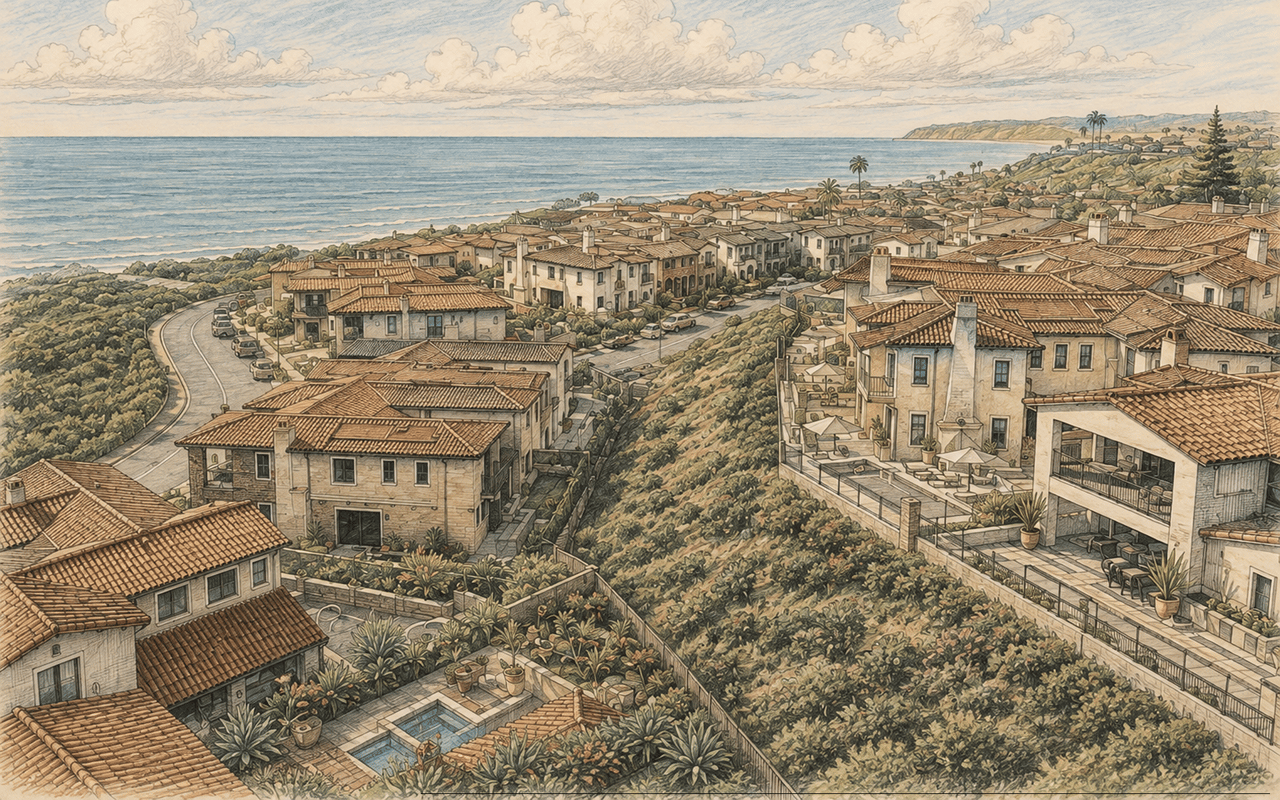
Southwest has some of San Clemente’s most interesting architectural variety. Original cottages and Spanish-influenced homes sit near mid-century ranch houses, extensively remodeled properties, later custom residences and contemporary coastal construction. On some streets, several generations of San Clemente architecture appear within one block.
That mix matters when comparing value. An older home may have a superior lot or historic character but need major systems work. A newer build may offer large glass openings, rooftop decks and modern indoor-outdoor living but occupy a tighter site. A remodeled home may look new in photographs while still carrying older plumbing, electrical, drainage or structural components beneath the finishes.
For homes from San Clemente’s earlier development era, historic status or preservation considerations can also matter. The City continues to protect the architectural character associated with early San Clemente, so buyers planning major exterior changes should verify a property’s specific historic status and applicable rules before assuming what can be altered.
Southwest is full of listings described as having an ocean view, but the phrase can mean many different things. A narrow horizon glimpse from a second-floor bedroom is not the same product as a broad whitewater view from the kitchen, yard and main living room. A sunset view across rooftops is different from a bluff-front outlook with the water immediately below.
I look at where the view is experienced, how much is visible while seated, whether neighboring vegetation or future construction could affect it, and how orientation changes morning and afternoon light. Catalina Island can be visible from certain positions on clear days, but I would never treat that as a guaranteed everyday feature.
For sellers, the photography and description should communicate the actual view rather than simply checking an “ocean view” box. In Southwest, the difference between horizon, panoramic, whitewater and direct bluff orientation can be one of the strongest value stories in the property.
The City recognizes distinct public beach accesses through this stretch of San Clemente, including T-Street, Lasuen/Lost Winds, Riviera and Calafia. The Hole/Boca del Canon is another local access point between T-Street and Lost Winds. Together, these access points organize how residents actually use the coast.
A property can be geographically close to the ocean but less convenient to the sand than another home slightly farther away with a direct route. Where do you cross? Are there stairs? Is there a pedestrian bridge or underpass? Is the return steep? Can you comfortably carry a board or beach gear? Those questions are more useful than measuring a straight line from the lot to the water.
For many Southwest buyers, the best location is not necessarily the one closest to the ocean. It is the one with the most usable combination of beach access, parking, privacy, view, lot, garage and daily convenience.
The City’s Beach Trail runs approximately 2.3 miles from North Beach to Calafia, with stops along the way at the Pier and T-Street. For Southwest residents, it can function as part of everyday life rather than a destination: morning walks, runs, beach access and a non-street route toward the Pier.
There is an important local nuance, though. The trail ends at Calafia rather than continuing as a city trail all the way through the far-south gated communities to Trestles. Buyers who picture one uninterrupted public coastal trail from T-Street to the county line should understand where the City trail actually ends and how the southern access pattern changes.
Parking deserves more attention in Southwest than it usually gets in a listing description. Some older homes were built when cars were smaller, garages were used differently and households did not necessarily expect two large vehicles plus guest parking. Near popular beach accesses, street parking can tighten on warm weekends and during good surf conditions.
I want to know whether a two-car garage actually fits two current vehicles, whether the driveway is usable, how easy it is to turn in and out, whether there is alley access and what happens when guests arrive. A spectacular view does not make a narrow garage wider.
These practical details can have a surprisingly large impact on long-term satisfaction, especially for buyers who plan to use the property as a full-time residence rather than an occasional beach home.
The railroad follows the shoreline through San Clemente and is part of the physical reality of living close to the beach. Depending on the property, residents may hear trains, crossing bells or other rail-related activity. The experience can vary dramatically with elevation, bluff position, distance and the way a home is built.
I recommend spending time at any serious purchase candidate with windows open and closed and at more than one time of day. Sound is personal, and an online map cannot tell you how a particular house actually feels.
Parts of Southwest can be very convenient to downtown San Clemente, particularly the northern T-Street side. Depending on the property, Avenida Del Mar, the Pier, restaurants, coffee shops and local businesses may be reachable on foot or by bike.
But I do not label every Southwest property “walkable” just because downtown looks close on a map. Grade matters. Street route matters. The walk home matters. Someone who wants to walk to dinner several nights a week should test that exact route before paying a premium for the idea of walkability.
The farther south you go toward Riviera, Calafia and the gated communities, the relationship to downtown changes. The beach may become the stronger lifestyle anchor while driving becomes more practical for restaurants and errands.
Southwest is not the place to assume a larger lot automatically means a better outdoor experience. Some lots are long and narrow. Some are sloped. Some have spectacular view decks but limited flat lawn. Others sit on quieter interior streets with surprisingly usable yards even though they are farther from the water.
Privacy also changes block by block. A home may have a private rear yard but close side setbacks. An elevated deck may capture a beautiful view while also looking into neighboring outdoor spaces. Bluff homes can feel open toward the ocean but exposed in other directions.
When comparing two Southwest homes, I focus on usable outdoor space rather than lot square footage alone. Shape, grade, orientation and relationship to neighbors often matter more than the number printed in the listing.
Living close to the Pacific comes with practical ownership considerations. Salt air can accelerate wear on metal, exterior hardware, windows, railings and mechanical equipment. Wind exposure varies by orientation, and older coastal homes may have been remodeled in stages over decades.
Drainage deserves particular attention where streets and lots fall toward the bluff or where retaining conditions are involved. I also pay close attention to roof history, windows and doors, plumbing and sewer condition, electrical updates, foundations, waterproofing and the permit history of additions or structural changes.
A beautifully remodeled kitchen does not tell you whether the sewer line, retaining system or waterproofing has been addressed. In Southwest, the site itself can be as important as the finishes.
For a gated or attached property, the due-diligence list expands beyond the house or unit. Association budgets, reserve funding, insurance responsibilities, architectural restrictions, beach-access rights, common-area maintenance and use rules all matter.
In the southern gated communities, I would also verify which amenities and access rights belong to the specific association rather than assuming every nearby gate shares exactly the same facilities. In attached communities, unit position, parking rights, storage, stairs and insurance structure can materially change the ownership experience.
If you want to compare current inventory while reading this guide, use my San Clemente homes for sale search. I would still narrow any serious Southwest search street by street rather than relying only on the map boundary.
A Southwest San Clemente listing should never be marketed with generic phrases such as “minutes to the beach” and left at that. Buyers considering this area often know the names T-Street, The Hole, Lost Winds, Riviera, The Loop, La Ladera, The Breakers, Cyprus Cove, Cyprus Shore and Cotton’s Point. They care about the actual access, the block, parking, view, walking route and street character.
If a home is on a higher-numbered beach block, explain why that matters. If the garage is unusually functional, show it. If the property has a usable yard in an area where outdoor space can be tight, make that obvious. If the view includes whitewater rather than only horizon, photograph it correctly. If someone can genuinely walk to Avenida Del Mar or carry a board to Lost Winds, document the route instead of using vague coastal language.
If a property sits inside a gated community, the marketing should explain the exact community rather than hiding behind a generic “guard-gated Southwest” label. The private beach relationship, association amenities, lot position and street location are part of the product.
The strongest Southwest marketing is specific enough that a buyer can understand why this address is different from another home three blocks away.
Southwest and Southeast sit next to each other geographically but offer different versions of San Clemente. Southwest is more tightly associated with the classic beach-street grid, T-Street, The Hole, Lost Winds, Riviera, The Loop, bluff positions and gated beach enclaves. Southeast adds the municipal golf course, more pronounced hillside neighborhoods, attached communities and upper-elevation streets such as Avenida Salvador and Avenida San Juan.
If you are comparing both sides of southern San Clemente, read my Southeast San Clemente guide. The right choice usually comes down to whether beach-street proximity and coastal access or hillside/golf-course variety better match how you want to live.
Southwest can be a strong fit for buyers who value the coast as part of everyday life rather than simply wanting an Orange County address near the ocean. It can work especially well for someone who wants to walk or bike to a favorite beach, surf regularly, live on an established residential street, own a home with architectural character, or prioritize ocean views and coastal access over master-planned amenities.
It is also an area where buyers need to be comfortable with individuality. Homes are not uniform. Streets are not uniform. Parking is not uniform. Views are not uniform. Even beach access is not uniform. That is part of the charm, but it is also why careful property selection matters so much.
I would rather help someone identify the two or three Southwest pockets that truly fit them than tell them the entire neighborhood is equally desirable. Once we know the beach, street pattern, view, yard, privacy and walking lifestyle they want, the search becomes much more precise.
Southwest San Clemente is generally the coastal residential area west of Interstate 5 beginning around Trafalgar Lane and continuing south through T-Street, The Hole, Lost Winds, Riviera, Calafia and the gated neighborhoods near the city’s southern boundary.
T-Street, The Hole/Boca del Canon, Lost Winds/Lasuen, Riviera and The Loop are important local reference points. La Ladera, The Breakers, Cyprus Cove, Cyprus Shore and Cotton’s Point are the major gated enclaves. There are also condo and attached-home pockets around South Ola Vista, Avenida Montalvo and Avenida Del Presidente.
On many Southwest streets, lower-numbered blocks sit farther inland and higher-numbered blocks tend to move toward the ocean and bluff. It is a useful local reference, but elevation, lot position, beach route and street character still matter more than the number alone.
Which beaches and access points are closest to Southwest San Clemente?
T-Street, The Hole/Boca del Canon, Lasuen/Lost Winds, Riviera and Calafia are major access points along this side of town. The most convenient beach depends on the exact street and the route from the property.
The Hole is the local name commonly used for Boca del Canon Beach, a smaller beach and access area between T-Street and Lost Winds near La Rambla and Boca del Canon. It is one of the details that often does not appear clearly on a general real-estate map.
The principal gated enclaves are La Ladera, The Breakers, Cyprus Cove, Cyprus Shore and Cotton’s Point Estates. La Ladera sits closer to T-Street/The Hole, while the other four are concentrated farther south near the city boundary.
Some gated communities in the far-south area have resident beach-access privileges and private coastal amenities. Those rights are association-specific, so buyers should verify the exact access and rules for the property they are considering.
Parts of it can be, especially closer to T-Street and downtown, but hills and route selection matter. I recommend walking the exact path to the beach or Avenida Del Mar before deciding that walkability is a reason to buy a particular home.
Yes. Views range from horizon glimpses to broad ocean, sunset, whitewater and direct bluff outlooks. Elevation, street side, neighboring homes and vegetation can create major differences even within the same block.
Yes. Although Southwest is strongly associated with single-family beach homes and custom estates, there are condominiums and attached properties in the southern part of the area, including communities around South Ola Vista, Avenida Montalvo and Avenida Del Presidente.
Yes. Southwest includes older Spanish-influenced and early San Clemente homes as well as beach cottages, mid-century properties and newer custom construction. Buyers should verify whether a particular property has formal historic status or preservation obligations before planning major changes.
Parking can tighten near popular access points, especially on warm weekends and good surf days. Garage dimensions, driveway usability and off-street parking are therefore practical features worth evaluating carefully.
Southwest is more directly tied to the beach-street grid, bluff access and coastal pockets around T-Street, The Hole, Lost Winds and Riviera, plus the southern gated beach communities. Southeast has more hillside terrain, municipal-golf-course influence, upper-elevation view streets and a different mix of attached housing.
For the right buyer, it is the direct relationship between residential life and the coast. Beach access, surf culture, the Beach Trail, established streets, individual architecture and highly varied micro-locations are woven into everyday life in a way that is difficult to reproduce in newer inland communities.
Southwest San Clemente is one of the areas where local knowledge becomes most valuable because broad neighborhood labels do not tell the full story. If you are buying, I can help you compare the individual streets, beach accesses, views, lots, gated communities and tradeoffs that are difficult to see from an online search. If you are selling, I can position the home around the exact Southwest features that make the property difficult to duplicate.
Explore Southwest San Clemente homes and neighborhood information or view all current listings through my San Clemente home-search page.
5,344 people live in Southwest , where the median age is 51 and the average individual income is $121,690. Data provided by the U.S. Census Bureau.
Total Population
Median Age
Population Density
Average individual Income
There's plenty to do around Southwest , including shopping, dining, nightlife, parks, and more. Data provided by Walk Score and Yelp.
Explore popular things to do in the area, including Westendorf Dave Produce Sales, Calafia Beach, and Seva Salute.
| Name | Category | Distance | Reviews |
Ratings by
Yelp
|
|---|---|---|---|---|
| Dining | 0.73 miles | 0 reviews | 0/5 stars | |
| Active | 0.14 miles | 65 reviews | 4.2/5 stars | |
| Active | 0.14 miles | 0 reviews | 0/5 stars | |
| Active | 0.4 miles | 14 reviews | 3.4/5 stars | |
| Active | 0.57 miles | 0 reviews | 0/5 stars | |
| Active | 0.82 miles | 0 reviews | 0/5 stars | |
| Active | 0.96 miles | 0 reviews | 0/5 stars | |
| Beauty | 0.81 miles | 31 reviews | 2.9/5 stars | |
| Beauty | 0.9 miles | 0 reviews | 0/5 stars | |
| Beauty | 0.95 miles | 2 reviews | 5/5 stars | |
| Beauty | 0.95 miles | 0 reviews | 0/5 stars | |
| Beauty | 1.01 miles | 0 reviews | 0/5 stars | |
|
|
||||
|
|
||||
|
|
||||
|
|
||||
|
|
||||
|
|
Southwest has 2,309 households, with an average household size of 2. Data provided by the U.S. Census Bureau. Here’s what the people living in Southwest do for work — and how long it takes them to get there. Data provided by the U.S. Census Bureau. 5,344 people call Southwest home. The population density is 7,037 and the largest age group is Data provided by the U.S. Census Bureau.
Total Population
Population Density Population Density This is the number of people per square mile in a neighborhood.
Median Age
Men vs Women
Population by Age Group
0-9 Years
10-17 Years
18-24 Years
25-64 Years
65-74 Years
75+ Years
Education Level
Total Households
Average Household Size
Average individual Income
Households with Children
With Children:
Without Children:
Blue vs White Collar Workers
Blue Collar:
White Collar: